Seiko 5 Sports SRPD: The Best Budget Automatic That Isn't a Dive Watch
The SRPD replaced the legendary SKX007, but it's not the dive watch fans wanted. Still, based on its specifications and what owners widely report, it may be the best automatic under $300.
About this article: this is an informational article based on public sources: manufacturer specifications, published hands-on reviews by other outlets, owner feedback and current prices. We have not tested the watch ourselves, we are watch enthusiasts rather than professional journalists, and nothing here is buying advice. No brand paid for it. Our method
At a glance
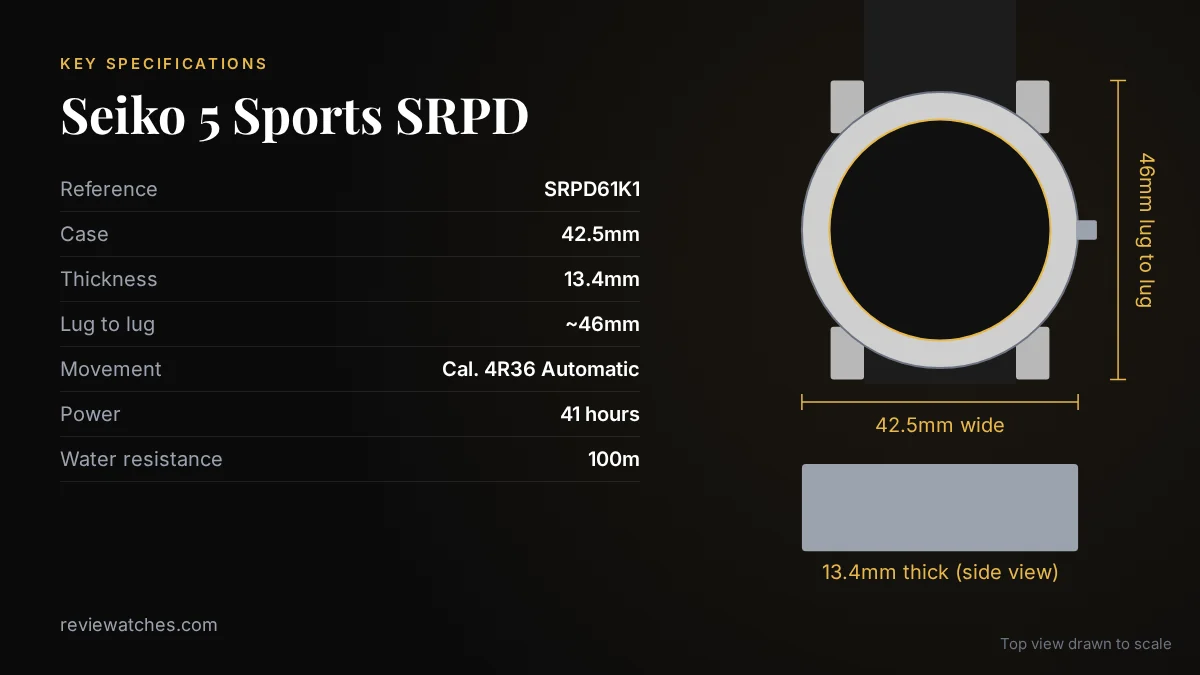
- Case
- 42.5mm
- Thickness
- 13.4mm
- Movement
- Cal. 4R36 Automatic
- Power
- 41 hours
- Water resistance
- 100m
- Often praised
- Excellent Cal. 4R36 movement with hand-winding and hacking
- Common criticism
- Hardlex crystal scratches easily (should be sapphire at this price)
📑 Table of Contents
This article on the Seiko 5 Sports SRPD examines the SRPD61, which arrived as Seiko's replacement for the discontinued SKX007, and for a lot of long-time fans the reaction was disappointment rather than excitement. That reaction makes sense once you look at what actually changed. But taken on its own terms, and based on its specifications and what owners and reviewers widely report, it is a genuinely strong watch.
Just not the one people wanted.
What Seiko Changed (And Why It Matters)
When Seiko discontinued the SKX007 in 2019, the watch community collectively lost its mind. The SKX had been the entry-level dive watch for decades. Bulletproof. ISO-certified. A proper tool watch you could buy for the price of a decent pair of trainers. The Seiko 5 Sports SRPD series was meant to be its replacement.
Except Seiko made some choices.
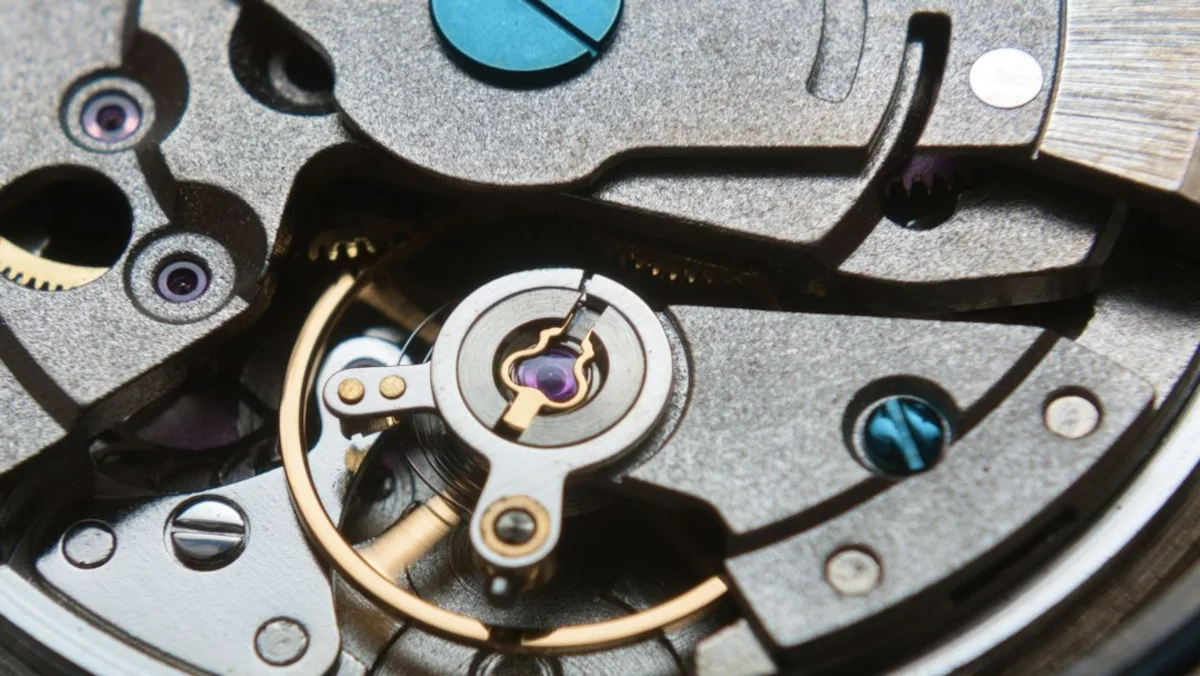
The movement got better. The Cal. 4R36 is a genuine upgrade over the old 7S26. It adds hand-winding, meaning the watch can be wound before it's put on rather than shaken into motion, and hacking seconds, so the time can be set accurately. The power reserve bumped from 40 to 41 hours (not earth-shattering, but there). The movement finishing, visible through the exhibition case back, is surprisingly nice for the price point, with perlage on the rotor and blued screws. It's not Grand Seiko, but it's miles better than what you'd expect in a £300 watch.
But then there's the crown. Still at 4 o'clock, as on the SKX, but it's no longer screw-down, just push-pull. Water resistance dropped from 200m to 100m. ISO 6425 certification is gone. This is no longer a dive watch by any official standard.
The exhibition case back is the most debated element. Opinion online is split between those who like being able to see the movement and those who think it undermines the tool-watch aesthetic. There's a reasonable case for both views. It's a nice touch for anyone who cares about the mechanics, but it does give the watch a slightly less rugged, more delicate impression than the solid case back on the SKX ever did.
Size and Wearability
The SRPD61 (the blue dial variant) measures 42.5mm, matching the SKX007. Lug-to-lug is about 46mm, with a height of 13.4mm. On paper, it should wear almost identically to the SKX, and by most accounts it does, with a slightly more refined case finish. The bracelet now has solid end-links, which removes the rattle that older Seiko 5 models were known for. The clasp is still stamped steel and feels a little basic, though it's functional.
The 4 o'clock crown position, carried over from the SKX, keeps the crown from digging into the back of the hand during activities that flex the wrist, such as typing. Moving the crown down and out of the way avoids that issue entirely, and the position is widely considered one of the SRPD's best design decisions.
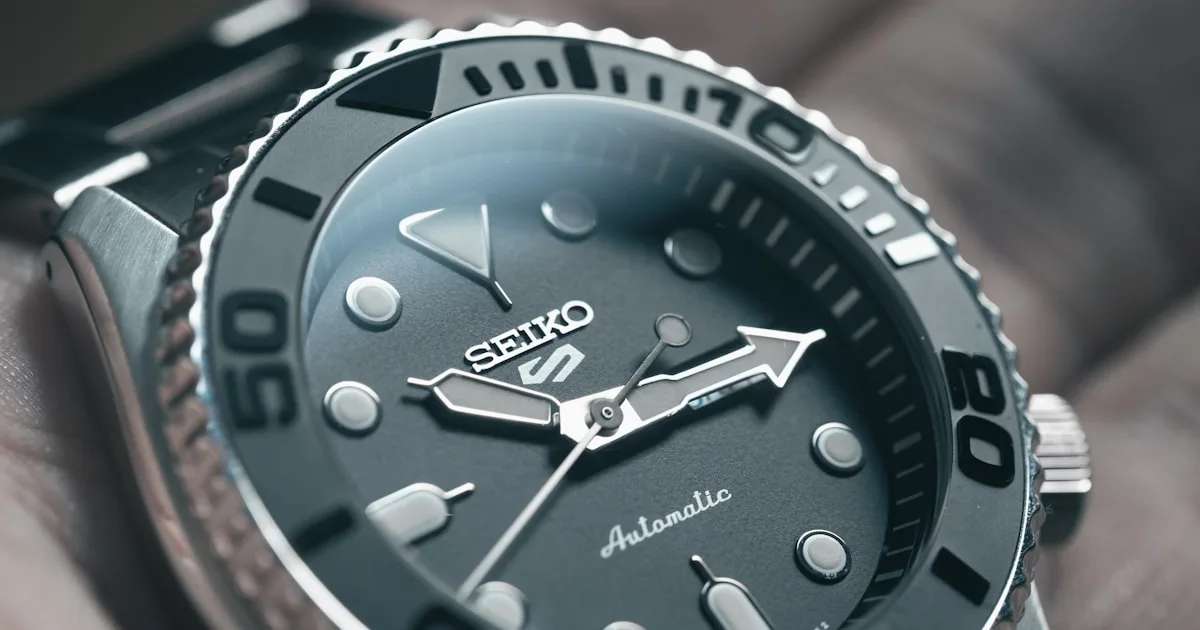
The blue dial is one of the most praised elements of this watch in reviews. It's described as a deep, slightly metallic blue that shifts with the light, reading closer to navy indoors and going almost electric in direct sun. Reviewers commonly note that photographs undersell the effect. The applied markers and hands carry generous LumiBrite lume, though by most accounts not quite as bright as the SKX's, still more than sufficient for reading in low light.
The Hardlex crystal is the recurring complaint in owner feedback, and it's easy to see why. Mineral crystal is more prone to fine scratching than sapphire with everyday wear, and owners frequently mention picking up small marks that are only visible in direct light. For a watch in this price bracket in 2024, sapphire arguably should be standard. The fact that Seiko still uses mineral crystal on everything below the Presage line is a fair criticism.
The Movement: Actually Worth the Upgrade
The Cal. 4R36 has a strong reputation as a workhorse movement. It's rated for +45/-35 seconds per day, and owners and reviewers widely report that real-world performance tends to beat that official spec by a comfortable margin, which is a big part of the movement's good name among budget automatic buyers. It's not chronometer-certified, but for a £300 watch, that level of accuracy is more than acceptable.
Hand-winding is a genuinely practical feature, particularly for anyone who doesn't wear an automatic every single day. Winding the watch manually before putting it on avoids the need to shake it into motion, and the winding action is described by reviewers as smooth. Hacking seconds allows the time to be set precisely against a reference, which matters to anyone who cares about accuracy.
The 41-hour power reserve is fine without being spectacular. A watch left off the wrist for a day or two will typically run down, so anyone rotating through multiple watches should expect to reset the time reasonably often. A 70-hour reserve, like the 6R35 found in the SPB models, would be nicer, but that comes at a different price point entirely.
The Dive Watch Question
Let's address this head-on: this is not a dive watch.
Seiko removed ISO 6425 certification, dropped water resistance to 100m, and replaced the screw-down crown with a push-pull design. Technically, 100m is sufficient for swimming and snorkelling, and owners commonly report no issues wearing the watch for exactly that kind of everyday exposure to water. But for actual diving, or simply for the peace of mind that comes with a certified dive watch, this isn't the right tool.
The lack of a screw-down crown is more of a psychological issue than a practical one for most wearers. There's no evidence of widespread water intrusion problems, but part of the appeal of a proper dive watch is the reassurance of screwing that crown down and knowing it's sealed. The SRPD doesn't offer that reassurance, and anyone used to a screw-down crown is likely to notice its absence.
Anyone who wants a proper dive watch would be better served by a used SKX, or by saving for a modern Seiko Prospex like the SPB143, which offers 200m water resistance, a screw-down crown, and sapphire. But as a sports watch built for daily life, including occasional swimming, the SRPD is more than capable.
Variants and Which to Buy
The SRPD series has about a dozen variants. The SRPD61 (blue dial, steel bezel) and SRPD63 (green dial, steel bezel) are the most popular. Both are handsome, well-balanced designs, with the blue generally considered more versatile and the green more distinctive.
Then there's the SRPE series, mechanically identical but with different aesthetics. The SRPE99 ("Bottle Cap") has a red aluminium bezel and a sportier look. The SRPE74 is all-black and considerably more stealthy. These typically retail in a similar £275-310 range, sometimes less on grey market sites.
For anyone buying a first automatic, the SRPD61 or SRPD63 seem like the sensible choices. They have the most classically proportioned, versatile designs and are the most likely to age well. The more distinctive variants are fun but riskier as a long-term "one watch" option.
The Bracelet (And Why Many Owners Replace It)
The OEM bracelet is decent rather than exceptional. Solid end-links are a welcome upgrade over older Seiko 5 models. The links are hollow, which keeps the bracelet lighter than it looks without making it feel flimsy. The clasp is stamped steel with four micro-adjustments and no tool-less adjustment, functional but noticeably budget in feel.
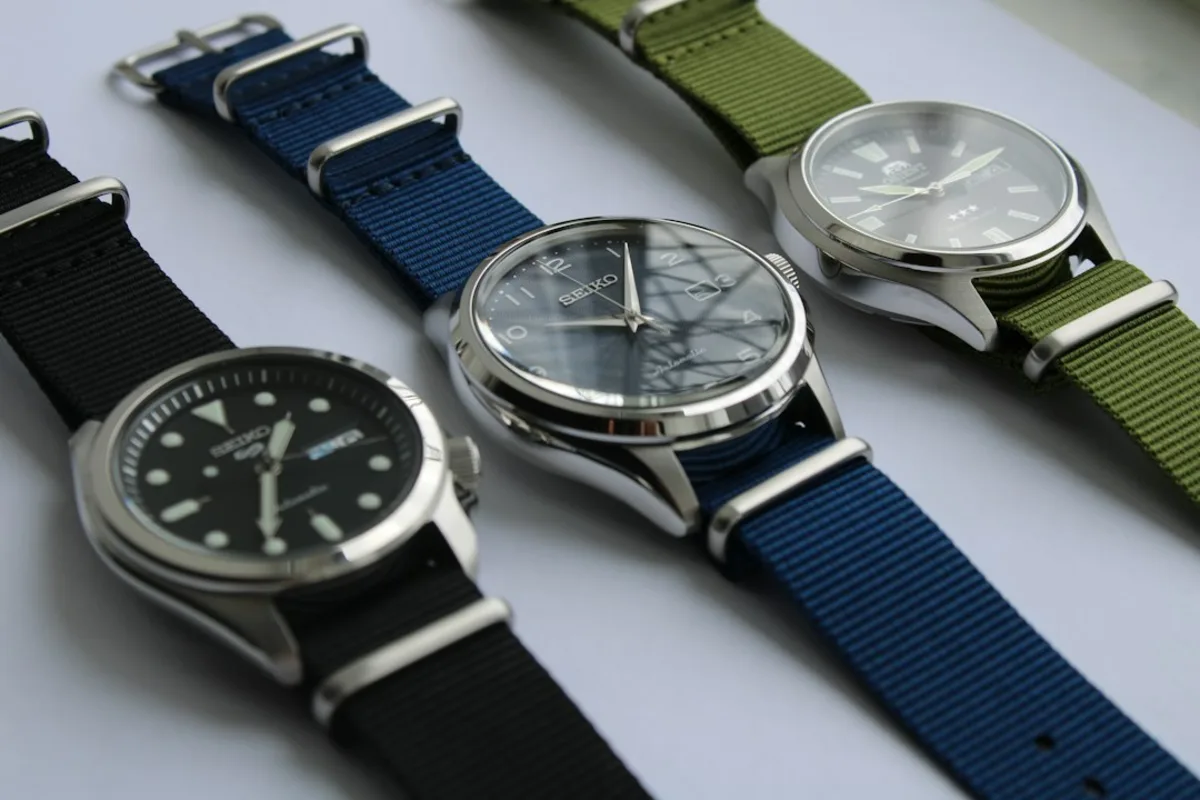
It's a watch that's frequently reported to transform on a NATO strap, taking on a more casual, versatile character that arguably suits it better than the bracelet, given that it's a sports watch rather than a true dive watch. Owners also commonly fit it to perlon, leather rally straps and silicone options, all of which the 22mm lug width and huge aftermarket support make easy.
The 22mm lug width is standard, so aftermarket straps are widely available. Budgeting around £15-30 for a decent NATO or perlon strap is enough to make the watch feel considerably more expensive than it is.
Versus a Used SKX007
This is the question everyone asks, and there's no clean answer.
A used SKX007 in good condition now costs £400-500, well above the price of a new SRPD. The SKX has the better case, with a screw-down crown, 200m water resistance and ISO certification. It's a proper dive watch, with decades of cult status behind it.
But the SRPD has the better movement. Hand-winding and hacking aren't just spec-sheet wins, they're genuinely useful features in daily life. The exhibition case back appeals to anyone who cares about seeing the movement, the finishing is a touch better, and it's new, with a warranty, rather than a decade-old watch that might need a service.
Anyone who wants a dive watch should look at the SKX. Anyone who wants a daily-wear sports watch with a better movement should look at the SRPD. Plenty of people, understandably, end up wanting both.
The Value Proposition
At £295, the SRPD61 looks like exceptional value. It offers a proper automatic movement, decent finishing, solid build quality and Seiko's reputation for reliability. The crystal should arguably be sapphire, the clasp does feel cheap, and it is not a dive watch. But there is little else at this price point that beats it as a complete package.
The closest competitors are the Orient Kamasu, which offers a sapphire crystal and 200m water resistance with an unremarkable power reserve, and the Citizen Promaster Diver, which is quartz rather than automatic but carries proper ISO certification. Both are excellent watches in their own right. But the SRPD has Seiko's cachet, a better movement for the money, and a huge modding ecosystem for anyone who wants to tinker.
For a first automatic, it looks close to ideal. As a daily beater, it's a strong option. As a "one watch collection," it's versatile enough to work. It's not precious or something to be babied. It reads as a tool that happens to look good and keep good time.
Final Thoughts
The Seiko 5 Sports SRPD is a fantastic watch. It's just not the watch a lot of people wanted. Fans wanted an SKX007 with a better movement. What Seiko delivered instead was a sports watch with an exhibition case back, a crown at 4 o'clock and 100m water resistance.
Judged for what it actually is rather than what it replaced, the criticisms hold up but shrink in significance. The scratch-prone crystal is a real weakness. The non-screw-down crown removes a layer of reassurance rather than function. The exhibition case back is a matter of taste, and a reasonable one to like.
Is it worth buying? Yes. Is it a sensible recommendation for someone buying their first automatic? Absolutely. Should it be taken diving? No, but that's true of most £300 watches.
It stands as the best automatic sports watch available new for under £300. That's not faint praise. That's just the assessment the specifications and the wider consensus support.
⚙️ Specifications
✅ Pros
- +Excellent Cal. 4R36 movement with hand-winding and hacking
- +Stunning blue dial with great lume
- +Comfortable 4 o'clock crown position
- +Solid end-links on bracelet (upgrade from older models)
- +Exceptional value under £300
- +Versatile on straps, huge aftermarket support
❌ Cons
- −Hardlex crystal scratches easily (should be sapphire at this price)
- −Not ISO-certified, only 100m water resistance (not a proper dive watch)
- −Stamped clasp feels cheap
- −Exhibition case back divisive (not tool-watch aesthetic)
- −Non-screw-down crown lacks dive watch reassurance
Written by
RevieWatches Editorial Team
RevieWatches is an independent, informational watch site. We research specifications, track pricing across retail and grey markets, and summarise what published...
More in Budget Picks
Seiko 5 Sports vs Orient Kamasu: Best Automatic Under $500?
Two of the best-value automatics you can buy sit within a hundred quid of each other. Here's how the Seiko 5 Sports and Orient Kamasu actually differ once you look past the spec sheet.
Reverie Watches: The Singapore Microbrand, Not the Replica Site
Two very different businesses use the Reverie name: a Singapore microbrand known for guilloché dials, and a replica site selling copies of Rolex and Patek. Here is how to tell them apart, and what the real watches offer.

Are Armitron Watches Good? An Honest Look at the Brand in 2026
Armitron sells hundreds of inexpensive quartz and digital watches. We looked at the catalogue, the warranty terms and the 2026 change of ownership to see what you really get.