Galaxy Watch 9 vs Pixel Watch 5: The Android Smartwatch Fight Gets Real
Samsung and Google just dropped their latest smartwatches within days of each other. Here's which one actually makes sense based on the specs.
About this article: this is an informational article based on public sources: manufacturer specifications, published hands-on reviews by other outlets, owner feedback and current prices. We have not tested the watch ourselves, we are watch enthusiasts rather than professional journalists, and nothing here is buying advice. No brand paid for it. Our method
📑 Table of Contents
- Design and Display: Size Matters, Brightness Matters More
- What's Inside: Chipsets and Performance
- Health and Fitness: Where the Real Battle Is
- Software and Updates: The Long Game
- Battery Life: The Eternal Compromise
- Price and Value: What Are You Actually Getting?
- Who Should Buy Which?
- The Bottom Line: No Wrong Answers, But Different Priorities
August 2026 might go down as the month Android smartwatches finally got properly interesting. Samsung unveiled the Galaxy Watch 9 at their London Unpacked event on July 22nd, shipped it August 7th, and then Google fired back with the Pixel Watch 5 announcement on August 12th (on sale August 20th). Both companies clearly spent the summer trying to one-up each other, and honestly, that's good news for anyone shopping in this category, making the Galaxy Watch 9 vs Pixel Watch 5 comparison worth watching.
Both launches landed within a fortnight of each other, which makes for an unusually clean side-by-side comparison. This piece works through what's been officially announced by both companies, reading the spec sheets closely to figure out what actually matters and what's just marketing noise.
This is a first-look comparison based on published specifications and manufacturer claims rather than extended use, since both watches only just launched. But there's enough detail in what Samsung and Google have released to draw some useful conclusions about who each watch is really for.
Design and Display: Size Matters, Brightness Matters More
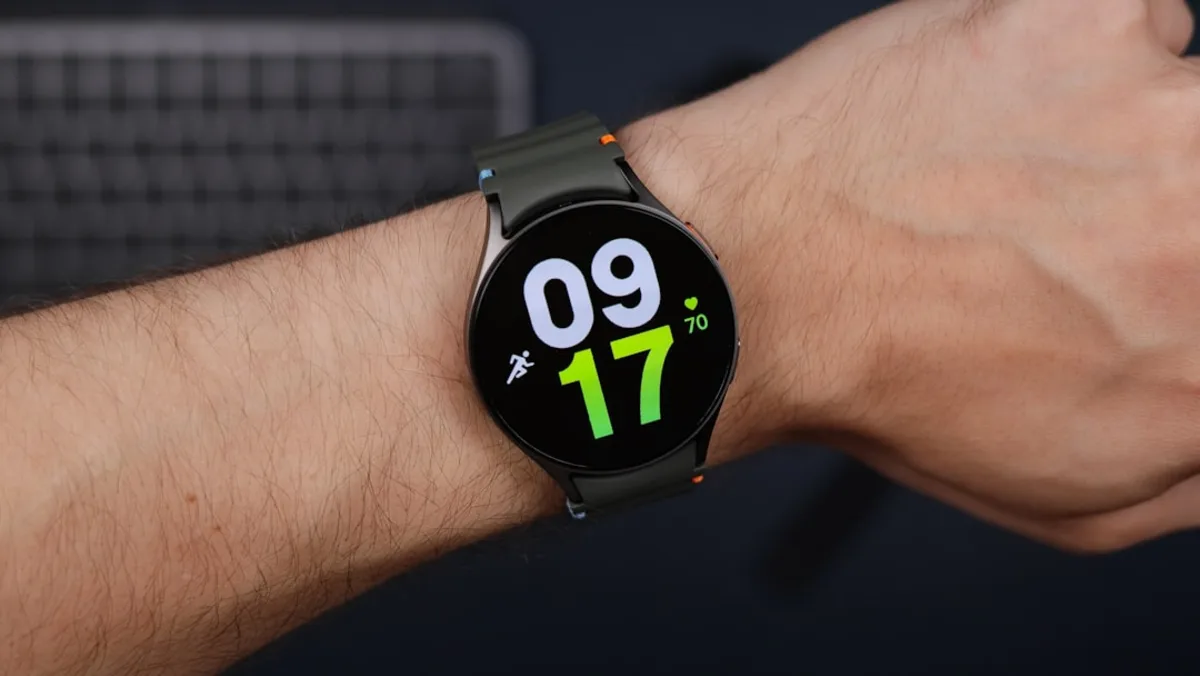
Samsung went big and bright this year. The Galaxy Watch 9 comes in two sizes, with 1.34-inch and 1.47-inch Super AMOLED displays. But the headline spec is that 3,000-nit peak brightness. That's an absurd number on paper, the kind of figure that suggests you could leave it face-up in direct August sun and still read it. The 60Hz refresh rate is a nice touch too, and should make scrolling through notifications feel notably smoother.
Google stuck with the Pixel Watch 4's physical design for the 5, which means you're getting the same 41mm and 45mm options with those rounded, slightly bulbous cases. The batteries got marginally larger (Google is coy about exact mAh figures, but "slightly" is the official line), which is worth noting given battery life has always been the Pixel Watch's Achilles heel according to reviewers. Google hasn't made peak brightness a headline number for the 5, while Samsung quotes up to 3,000 nits, so if outdoor readability matters to you, it's worth checking independent brightness tests once they appear.
For smaller wrists, the 40mm Galaxy or 41mm Pixel look like the sensible choices on paper. Anything above 42mm risks looking oversized on a slim wrist, though plenty of people prefer the bigger real estate for workout stats and notifications. The Pixel's domed glass looks elegant in photos but is reported to catch glare more than a flatter profile would. Samsung's flatter design should be more practical in bright conditions.
What's Inside: Chipsets and Performance
This is where things get properly interesting. The Galaxy Watch 9 is the first Samsung wearable running Qualcomm's new Snapdragon Wear Elite platform. Qualcomm's been promising a Wear OS chip that doesn't feel dated for years now, and by early accounts, the Wear Elite looks like a genuine step forward. Samsung's implementation should mean snappier app launches, better battery efficiency under load, and fewer of the raise-to-wake delays that have long irritated Wear OS users.
Google went a different route. The Pixel Watch 5 uses whatever chip Google's using (the company is vague about specifics), but claims it's about 20% faster than the Pixel Watch 4. That's not nothing, but it's also not the generational leap Samsung is betting on. Google instead leans hard into cloud processing. Its new cloud-based GPS post-processing is claimed to be twice as accurate in difficult environments, such as urban canyons or dense tree cover. Whether that claim holds up in practice or is really just clever framing for "we're offloading work to save battery" remains to be seen.
Both watches should perform solidly for 2026, but Samsung is riding a newer platform. That usually translates to better long-term support and fewer stuttering complaints two years down the line.
Health and Fitness: Where the Real Battle Is
This is arguably why most people buy smartwatches now. Few are buying a watch at this price purely to check the time.
Samsung is positioning the Watch 9 heavily around sleep, cardiovascular tracking, exercise, and recovery. The company has been refining its sleep tracking algorithms for years, and the Watch 9 is said to improve further on detecting sleep stages and offering actionable insights. The cardiovascular features (heart rate, ECG, blood pressure monitoring where approved) are table stakes at this point, but Samsung's recovery metrics have reportedly become genuinely useful for anyone training seriously, since knowing when the body is ready for another hard session matters.
Google's counter-punch is blood pressure trends and a feature called Breathing Emergency Detection. The blood pressure feature doesn't give absolute readings (a cuff is still needed for that), but it tracks trends over time, which is arguably more useful for most people day to day. The Breathing Emergency Detection is aimed at sleep apnea and similar conditions, automatically alerting if it detects irregular breathing patterns during sleep.
Both offer solid fitness tracking (steps, runs, cycling, swimming, the usual) and both integrate with third-party apps. The Pixel leans harder into Fitbit's ecosystem, which Google owns, and that's a clear advantage for anyone already using Fitbit. Samsung's approach is more open but its own Health app is reportedly somewhat siloed from other platforms.
Then there's Gemini. Google is building its AI assistant into the Pixel Watch 5, promising more natural conversations, complex queries, and contextual suggestions from the wrist. Whether that proves genuinely useful or ends up as a battery-draining gimmick is an open question. On-wrist AI has yet to prove a killer use case beyond setting timers.
Software and Updates: The Long Game
Samsung is promising five years of OS and security updates for the Watch 9. That's a new commitment for the company and actually competitive with Apple. It means the watch should still be getting meaningful software improvements in 2031, which for a smartwatch is borderline revolutionary. Most Android wearables historically get lucky to see two years of real support.
Google has been cagey about update timelines for the Pixel Watch 5, but the Pixel Watch 3 was promised three years of updates, so similar support seems likely here. That's good, but not five-years-good. For anyone who tends to keep devices for a long time, Samsung's commitment is the more reassuring one.
Both run Wear OS 5, or will shortly after launch. App selection is identical between the two. Performance differences will come down to hardware and manufacturer tweaks rather than the underlying OS.
Battery Life: The Eternal Compromise
Neither company has given hard numbers yet, but based on previous generations, Samsung typically manages around two days with moderate use on the larger model, maybe a day and a half on the smaller one. The Pixel Watch has historically been a daily charger, full stop, according to widespread owner reports. The "slightly larger" batteries in the Watch 5 might push that to a day and a bit with conservative always-on display and workout tracking settings, though a jump to two full days seems unlikely.
If battery life is the priority, the Galaxy Watch 9 probably edges it based on the historical pattern. But both remain compromised compared with something like a Garmin that can run a week between charges. That's the ongoing trade-off with feature-rich smartwatches.
Price and Value: What Are You Actually Getting?
The Galaxy Watch 9 starts at $379.99 for the 40mm Bluetooth model. Add GPS/LTE and the price climbs further. Samsung also sells a larger size, so it's worth checking its current price before buying.
The Pixel Watch 5 is $399 for the 41mm, $429 for the 45mm. That's for the base Bluetooth/Wi-Fi models, with LTE versions costing more.
So the two are basically price-matched, with the Galaxy offering a slightly cheaper entry point if you go small and skip LTE. For the money, both deliver flagship-level sensors, decent build quality (both are water-resistant to 5ATM, fine for swimming), and solid software. Neither is a budget option, but neither looks obscenely overpriced for what's on offer.
Who Should Buy Which?
The Galaxy Watch 9 makes sense for anyone who wants the brightest display on any smartwatch, values long-term software support (five years is a genuinely big deal), or is already embedded in Samsung's ecosystem, where integration with Samsung phones tends to be tighter. It's also the better pick if battery life matters and nightly charging is unappealing.
The Pixel Watch 5 makes sense for anyone deep into Google's services, wanting the tightest Fitbit integration, or intrigued by the cloud GPS processing and blood pressure trends. It's also the one to choose for those who prefer the Pixel's more jewellery-like aesthetic over Samsung's chunkier, sportier cases.
The Bottom Line: No Wrong Answers, But Different Priorities
On balance, the Galaxy Watch 9 looks like the stronger pick, mostly on the strength of that five-year update promise and the Snapdragon Wear Elite chip. For anyone who tends to hold onto devices for years, knowing Samsung is committed to supporting this one into the 2030s counts for a lot. The extreme brightness spec is arguably overkill, but it's a welcome one.
That said, anyone already carrying a Pixel phone and wanting everything to work seamlessly together has good reason to choose the Pixel Watch 5. Google has clearly improved at hardware over the last few years, and this looks like a mature product rather than an experimental first attempt at wearables.
Both are strong options and both should serve their respective ecosystems well. The sensible approach is to pick based on ecosystem fit and priorities rather than assuming one is objectively better. Android smartwatches finally look like they've moved past being "the thing you settle for if you don't have an iPhone." That's real progress.
⚙️ Specifications
Written by
RevieWatches Editorial Team
RevieWatches is an independent, informational watch site. We research specifications, track pricing across retail and grey markets, and summarise what published...
More in Smart Watches
Should You Upgrade to the Apple Watch Series 12?
The Series 12 arrived in September with faster charging, better glass, and a few exclusive features. Whether you should buy one depends entirely on which watch is sitting on your wrist right now.

Apple Watch Ultra 4: The Smart Watch That Finally Gets Serious
Apple's latest Ultra lands with 50-hour battery, on-device AI, and a clear message: smartwatches can do endurance now. But does it change the game for proper watch people?

Apple Watch Series 12: The Future Arrived, Then Tripped Over Its Own Feet
Apple's Series 12 brings proper on-device AI and a comeback ceramic case, but dodges the elephant in the room: battery life remains stuck in the past.