How to Spot a Fake Rolex Without Getting Played
Superfakes are shockingly good now. Here's what to check before you hand over your money, and why trusting your gut isn't enough anymore.
About this article: this is an informational article based on public sources: manufacturer specifications, published hands-on reviews by other outlets, owner feedback and current prices. We have not tested the watch ourselves, we are watch enthusiasts rather than professional journalists, and nothing here is buying advice. No brand paid for it. Our method
📑 Table of Contents
- Buy From Reputable Sources (But Know What That Means)
- Papers and Box Mean Almost Nothing
- Serial and Reference Numbers
- The Cyclops Magnification
- Dial Printing and Lume Quality
- Rehaut Engraving
- Movement Sound and Sweep
- Weight and Bracelet Finishing
- Clasp Codes
- Price Too Good to Be True
- Get It Authenticated Before Paying
- Superfakes Are Real
- Final Thoughts
Fake Rolexes turning up in the hands of unsuspecting owners is a well-documented problem. They're often bought secondhand from 'trusted' sellers, or inherited from relatives who swore they were genuine. The fakes are getting better, and alarmingly so. If you're buying a Rolex outside an authorised dealer, knowing how to spot a fake Rolex means understanding what you're actually looking at.
Let's be clear upfront: modern superfakes can fool almost anyone, including experienced collectors. The only way to be certain is a professional inspection by a Rolex service centre or a qualified independent watchmaker who sees these things weekly. Everything else is risk management.
But risk management matters. Here's what to check, in order of usefulness.
Buy From Reputable Sources (But Know What That Means)
This is obvious, but 'reputable' has been diluted. A nice website isn't reputable. An Instagram account with 50k followers isn't reputable. A guy in a suit at a watch fair isn't reputable.
Reputable means: established dealers with physical premises you can visit, a trading history you can verify, and reviews from actual customers you can track down. Chrono24 has dealer ratings. WatchBox has a return policy. A local jeweller who's been in business since 1987 has skin in the game.
Even then, mistakes happen. Frankenwatches (a genuine case fitted with a fake dial) have reportedly caught out respected dealers after passing through several previous owners. It happens even at the higher end of the trade.
Papers and Box Mean Almost Nothing
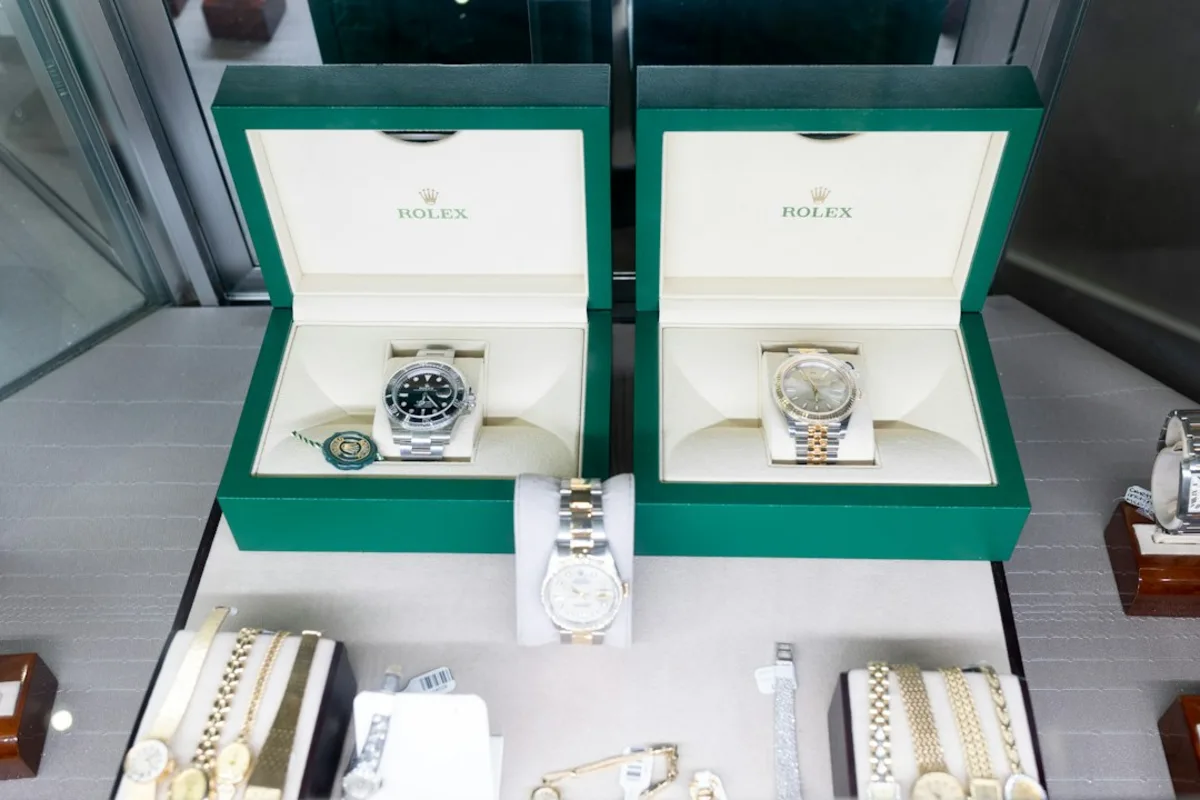
This hurts to write because we all love a full set. But papers and boxes are faked too, often very well. Warranty card holograms can reportedly look flawless even under close comparison with a genuine card under a loupe.
The numbers on papers can be checked against Rolex databases by authorised dealers, but counterfeiters know this. They lift serial numbers from real watches sold years ago. A 'new' 2018 Submariner might have papers matching a watch that's currently sitting in a safe on the other side of the world.
Boxes have shifted designs over the years. Older fakes used the wrong shade of green or the wrong font on the outer sleeve. Modern ones get it right. The box proves nothing.
Serial and Reference Numbers
Every Rolex has a serial number (between the lugs at 6 o'clock on older models, engraved on the rehaut at 6 o'clock since around 2005) and a reference number (between the lugs at 12 o'clock, or also on the rehaut on newer pieces).
Check these numbers exist. Check they're engraved cleanly. On older Rolexes, the engraving should be thin and precise. Fakes sometimes have numbers that look stamped or rough. But good fakes get this right too.
Cross-reference the serial with the model. Rolex serial numbers follow a pattern by production year. If someone's selling a 2015 Submariner with a serial from 2008, something's wrong. There are databases online (Bob's Watches has one) that match serials to approximate years.
This isn't foolproof. Serial numbers get polished off and re-engraved during dodgy services. But it's a data point.
The Cyclops Magnification
Rolex's cyclops magnifies the date 2.5x. Fakes often get this wrong, sitting at 1.5x or 2x. The date window should look huge and crystal-clear under the cyclops. If it looks only slightly magnified, walk away.
This used to be the easiest tell. It's harder now, with some recent fakes reportedly achieving proper 2.5x magnification. But plenty of older fakes and cheaper knock-offs still mess this up, so it's still worth checking.
Dial Printing and Lume Quality
Get a loupe. A 10x jeweller's loupe costs fifteen quid and could save you thousands.
Look at the dial printing under magnification. Rolex text should be crisp, with no bleeding or fuzzy edges. The coronet (crown logo) should be perfectly formed. The minute markers should be applied (not printed) and sit evenly.
The lume plots (hour markers) should glow a consistent colour. Rolex uses Chromalight on modern pieces, which glows blue. Older models used Super-LumiNova (green) or tritium (warm cream colour on vintage). If the lume colour doesn't match the era, that's a red flag.
Fakes are known to sometimes mix lume colours or apply lume unevenly, with uneven brightness across markers reported on some examples. Rolex's quality control doesn't allow that.
Rehaut Engraving
Since the mid-2000s, Rolex engraves 'ROLEX ROLEX ROLEX' repeatedly around the inner rehaut (the ring between the dial and crystal). It's tiny, precise, and aligned.
Fakes get this wrong often. The engraving might be too deep, poorly aligned, or use the wrong font. Sometimes it's missing entirely on models that should have it.
Check alignment. The coronet at 12 o'clock on the dial should align with the rehaut engraving. If it's off by even a millimetre, be suspicious.
Movement Sound and Sweep
Rolex uses high-beat automatic movements (28,800 bph). The seconds hand sweeps smoothly, not in ticks. If the hand appears to 'tick', it's a quartz fake, the bargain-bin end of the counterfeit market.
But cheap automatic movements (Chinese clones) also sweep. The giveaway is reportedly the sound. A genuine Rolex movement runs nearly silent, with only a very faint, smooth hum audible with the watch held to the ear. Loud ticking or a grinding noise suggests something's wrong.
This isn't definitive. A genuine Rolex that's been badly serviced might sound rough. A good fake with a cloned movement might sound decent. But it's worth noting.
Weight and Bracelet Finishing
Rolex watches are heavy. They use solid-link bracelets, 904L steel, and substantial cases. A fake made with cheaper materials is commonly reported to feel noticeably light by comparison, a difference owners say becomes obvious once you've handled a genuine piece.
The bracelet finishing is meticulous, by all accounts. Brushed surfaces should be even and directional. Polished surfaces should be mirror-smooth with no ripples. The links should feel solid when the bracelet is flexed, with no rattling or loose tolerances.
The clasp is a big tell. Rolex clasps are engineered to open and close with a satisfying click and no slop. Flip it over and look at the engraving: the coronet, the reference code, the metal stamp. Fakes often get the font wrong or engrave too deeply.
Clasp Codes
Inside the clasp, there's a code that indicates when the bracelet was made. It's a letter (or two letters on newer pieces) followed by a number. Cross-reference this with the watch's serial to check the bracelet matches the case age.
Mismatched codes aren't always a fake. Bracelets get replaced. But if someone's selling a 'full original' 2020 watch with a clasp code from 2010, that warrants questions.
Price Too Good to Be True
If a Submariner is listed at half the going rate, it's fake. Or stolen. Either way, walk.
The temptation is understandable. Maybe the seller doesn't know what they have, maybe it's an estate sale, maybe you've found the deal of the decade. You haven't. Rolex prices are public knowledge. Everyone has Google. No one accidentally sells a £10,000 watch for £5,000.
Even 'good' deals (10-15% below market) deserve scrutiny. Why is it cheap? Is the seller desperate? Is something wrong with it? Ask.
Get It Authenticated Before Paying
This is the only rule that matters. Before handing over money, take the watch to a Rolex service centre or a trusted independent watchmaker and ask for authentication.
A Rolex service centre will open the case, examine the movement, and confirm whether it's genuine. Some do this for free, some charge a small fee. It's worth every penny.
If the seller won't allow this, the deal should be off. A genuine seller has nothing to hide. If they say 'I need the money today' or 'I can't wait for authentication,' that's a warning sign.
Independent watchmakers who specialise in Rolex can also authenticate. Find one with a good reputation, check forums and reviews. A proper inspection costs maybe £50-100. That's cheap insurance on a five-figure purchase.
Superfakes Are Real
It bears repeating because it's the uncomfortable truth: modern superfakes can pass almost every test listed here. They can have correct cyclops magnification, good rehaut engraving, proper weight, high-beat clone movements that sound decent, and convincing finishing.
The only reliable way to catch a superfake is to open the case and examine the movement. Rolex movements have specific finishing, jewel counts, engravings, and construction that fakes can't replicate perfectly. A watchmaker who knows Rolex will reportedly spot it instantly.
Everything else (dial checks, serial checks, bracelet finishing) is about filtering out the obvious fakes. The best superfakes need a professional.
Final Thoughts
Buying a pre-owned Rolex is nerve-wracking. The market is flooded with fakes, and the fakes are better than ever. But there are ways to protect yourself.
Buy from reputable dealers. Check every detail you can. Don't trust papers and boxes alone. And, above all, get it authenticated before paying.
If that's not something you're willing to do, buying new from an authorised dealer removes the risk entirely. Retail price, but peace of mind.
Written by
RevieWatches Editorial Team
RevieWatches is an independent, informational watch site. We research specifications, track pricing across retail and grey markets, and summarise what published...
More in Luxury
How to Buy a Rolex at Retail: Waiting Lists Explained
Buying a Rolex at list price isn't impossible, it's just slow, political, and nothing like buying any other watch. Here's how the waiting list game actually works.

Farer Watches: British Design, Swiss Movements, Bold Colour
Farer is an independent British brand making colourful, Swiss-made watches sold direct. We looked at its movements, sizes, prices, guarantee and returns.
AIS Watches: Is This Pre-Owned Luxury Dealer Legit?
AIS Watches is an Atlanta dealer in pre-owned and new luxury watches with a strong review record. Its payment and return terms put more risk on the buyer than big platforms, so here is how to buy safely.