Orient Mako II: The Best $150 You'll Ever Spend on a Watch
An automatic dive watch with 200m water resistance, hand-winding, and proper lume for under $150. The Mako II makes the entire entry-level Swiss market look silly.
About this article: this is an informational article based on public sources: manufacturer specifications, published hands-on reviews by other outlets, owner feedback and current prices. We have not tested the watch ourselves, we are watch enthusiasts rather than professional journalists, and nothing here is buying advice. No brand paid for it. Our method
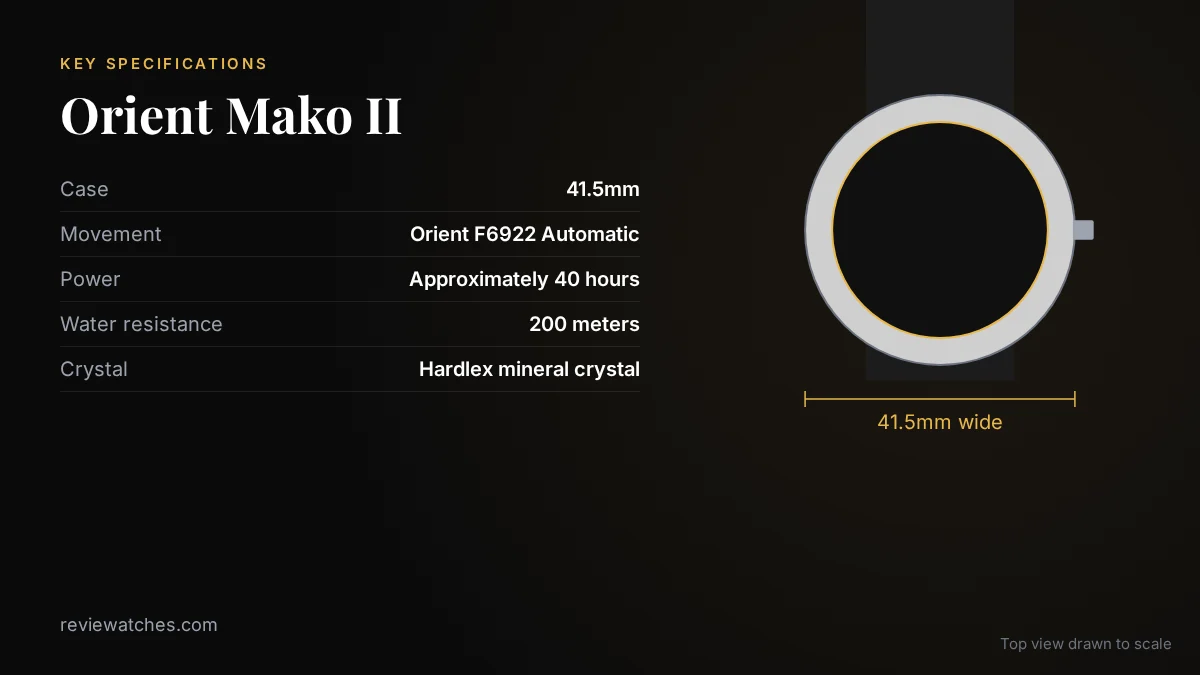
At a glance
- Case
- 41.5mm
- Movement
- Orient F6922 Automatic
- Power
- Approximately 40 hours
- Water resistance
- 200 meters
- Often praised
- Exceptional value with genuine dive watch capability
- Common criticism
- Bracelet appears cheap with hollow end links and a basic clasp
📑 Table of Contents
Some watches keep getting talked about long after their launch, and the Orient Mako II is one of them. This article on the Orient Mako II looks at why it has no business being this well regarded at this price, and yet it consistently tops recommendation lists for anyone asking where to start with mechanical watches. There's no need to reach for a flagship to explain why. The specification sheet does most of the talking.
The reason is simple: this is one of the best values in mechanical watches, full stop. Very little at this price comes close.
What You're Actually Getting
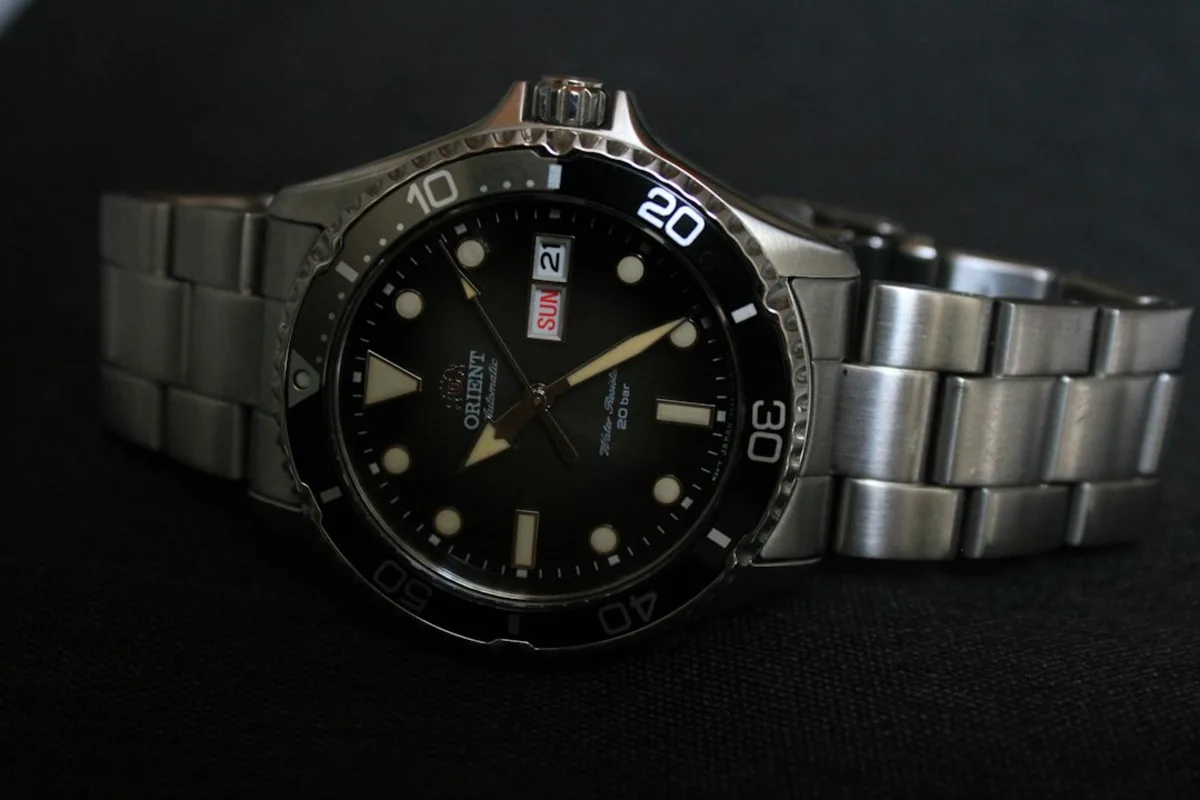
Let's establish what we're talking about. The Orient Mako II is a 41.5mm dive watch with 200 meters of water resistance, an automatic movement with hand-winding and hacking, a unidirectional bezel, and lume that owners consistently describe as excellent. You can find it for under $150 if you wait for a sale, sometimes closer to $120.
That's a striking price point. Normally you'd be looking at fashion watches with quartz movements from companies that don't actually make watches themselves. Instead, you're getting a proper tool watch from a manufacturer with genuine watchmaking heritage. Orient has been doing this since 1950, and it shows in the details.
The F6922 caliber inside (Orient calls it the F69, part of the same family) is their workhorse automatic. It's not decorated, and there's no display back here, just a solid caseback. But according to Orient's specifications and widely reported owner experience, it runs reliably, is accurate enough for daily use, and can be hand-wound after time off the wrist. The hacking seconds hand means the time can be set precisely, which sounds basic but plenty of budget automatics still skip it.
Owners commonly report daily rates in the region of +15 seconds a day, which is perfectly acceptable for a movement at this price and, by many accounts, better than some Swiss movements costing far more.
Size and Wearability
Here's something worth noting about affordable watches: they can wear better than expensive ones. The stamped steel case construction of the Mako II keeps weight down compared with solid, premium-alloy cases on pricier pieces, which should make it sit lightly on the wrist.
The 41.5mm case is widely reported to wear smaller than the number suggests, thanks to short, curved lugs. On a mid-sized wrist this should fit comfortably. The thickness is about 13mm with the crystal, which sounds chunky on paper but is in keeping with what you'd expect from a proper dive watch. It's meant to have some presence.
The bracelet is the one area where the price becomes apparent. Reviewers and owners regularly note that it rattles, that the end links have some play, and that the clasp is functional but basic. Many owners choose to swap it for a NATO or rubber strap fairly early on, which isn't so much a criticism as a known trait of the watch. The upside is that better aftermarket bracelets are widely available if the stock one bothers you.
On a grey NATO, by most accounts this looks like it costs considerably more than it does. On a rubber dive strap, it's well suited to actual swimming, and the 200m rating is a genuine, usable spec rather than a marketing number.
The Bezel and That Click
The bezel action is widely described as good, not Rolex-smooth, not SKX-crisp, but positive and satisfying. It's got 120 clicks, which gives finer control than the typical 60-click setup. Reviewers note that each click is definite enough that you're not left second-guessing whether it moved, with only a small amount of back-play reported.
The insert is aluminium, not ceramic, which means it will scratch and fade with use. Many owners consider this part of the watch's charm, since it develops a lived-in look over time rather than staying pristine. If you want a bezel that resists ageing, keep it in a box. If you want a watch that shows where it's been, the Mako II is built for that.
The pearl at twelve is simple but well-applied, according to reviews, with lume and positioning that get it right in a way some considerably more expensive watches manage to fumble.
Lume: Genuinely Impressive
This is where the Mako II is widely reported to punch above its weight. Owners and reviewers consistently describe the lume as thick, bright, and long-lasting, offering proper nighttime legibility rather than a faint glow that fades within a minute.
Orient uses what it calls LumiBrite (licensed from Seiko's parent company), applied generously. The hour markers are filled squares, the hands are broad, and the lume is reported to charge quickly under most light sources and remain legible well into the night.
This compares favourably with Swiss watches at three or four times the price where lume is often an afterthought. Several well-known Swiss dive watches, by widespread reviewer consensus, have weaker lume than the Mako II, which is a little awkward for brands charging a significant premium.
Design: Classic Done Right
The Mako II doesn't try to reinvent anything. It's a straightforward dive watch with clean lines and sensible proportions. The indices are applied rather than printed, which adds depth to the dial. The handset is simple: a straight hour hand, a pointed minute hand and a lollipop seconds hand, all highly legible according to reviews.
The black dial version is generally considered the most versatile, working equally well with casual and slightly smarter outfits. Blue and pepsi-bezel variants are also available for those who want more colour.
The day-date window at three o'clock is a useful complication. The day display cycles through multiple languages, which is either a nice touch or a minor gimmick depending on taste.
One small, commonly noted complaint: the date wheel isn't colour-matched to the dial. On the black-dial version it's white with black text, creating a slight contrast that some owners find noticeable enough to bother them, though it's far from a dealbreaker. A number of owners swap the date wheel for a black one, though this requires opening up the movement.
The Movement: F6922 Caliber
Orient's F6922 is based on their long-running 46-series movements, updated with modern features. According to the specifications, you get:
- Automatic winding with manual wind capability
- Hacking seconds (stops when the crown is pulled out)
- Day and date complications
- Approximately 40-hour power reserve
- Beat rate of 21,600 vibrations per hour
That beat rate is slower than modern Swiss standards (typically 28,800 vph), which means the seconds hand has a slightly chunkier tick that's noticeable if you're looking for it, though it makes little practical difference.
The movement is unregulated from the factory, meaning Orient doesn't individually adjust each one for accuracy, instead relying on the movement design to hit acceptable tolerances. Reported daily rates typically fall somewhere between +10 and +25 seconds per day, which is fine for daily wear. If chronometer-level accuracy matters to you, this isn't the watch for that, though arguably that level of precision is overrated for anything that isn't navigation equipment.
Orient movements are generally understood to be cheap to service, with parts readily available, so long-term running costs should be modest compared with a Swiss piece.
Comparison: What Else Exists at This Price?
Not much, honestly. The closest competitor is Seiko's SKX line, but those have been discontinued and now trade for more than they're worth on the secondhand market. The SKX was brilliant in its time, but the Mako II arguably represents the better buy today.
Invicta makes cheap dive watches, but they're mostly oversized fashion pieces with inconsistent quality control by most accounts. Citizen's Promaster line is good but typically sits at a higher price point. Vostok makes quirky Russian dive watches that are fun but won't suit everyone.
If you want an automatic dive watch for under $200, the real choice is generally between the Mako II and the Orient Ray II, a similar watch with different indices and no day complication. Both are well regarded. The Mako's design language is slightly more modern, the Ray leans a bit more vintage. It comes down to preference.
Known Weak Points
The bracelet is the most consistently criticised element. The hollow end links create a slight gap between the case and the first bracelet link, which can look cheap under close inspection. The stamped clasp has no micro-adjustments, just the basic five-link adjustment holes, which can be limiting for those between sizes.
A no-date version would be a welcome option. The date window is useful but breaks up the dial's symmetry, and some of the best-regarded dive watches have moved away from date displays for exactly that reason. Orient doesn't offer a no-date Mako II, though it has done so on other models.
The crown doesn't screw down. It's a push-pull crown, which is rated for 200m of water resistance and functionally fine, but feels less reassuring than a screw-down crown, at least psychologically.
Who This Watch Is For
If you're getting into mechanical watches and don't want to spend serious money before you know what you like, this is a sensible place to start. The Mako II is a good teacher of what matters in a watch, from automatic movements to what water resistance actually means to how a proper tool watch should wear.
For experienced collectors, it's often recommended as a beater, the watch you'd wear doing the garden, fixing the car, or travelling somewhere you don't want to risk anything precious.
For anyone who actually dives, this is a genuinely capable watch. The 200m rating is real, the lume is excellent by most accounts, and the bezel works properly. You're not giving up functionality by saving money, you're giving up brand prestige, and if you're reading this article, that's probably not high on your list of priorities.
Long-Term Durability
By most owner accounts, the Mako II holds up well over years of use, often outlasting the initial impression its price might suggest. The crystal is Hardlex, Orient's mineral crystal rather than sapphire, so light scratching over time is expected and widely reported, though generally not enough to affect legibility. The case can pick up marks on its polished surfaces with regular wear, and the aluminium bezel will show wear over time.
None of this counts against the watch. This is what tool watches are supposed to look like with use, and the pursuit of pristine condition at all costs is arguably a fairly recent, slightly overwrought obsession. Watches are built to be used.
Reports suggest the movement generally keeps time within its original spec over the long term, and the day-date complication and bezel action tend to remain reliable with normal care.
The Bottom Line
The Orient Mako II is a watch that gets recommended constantly to people asking where to start with mechanical watches, and for good reason. It's the kind of watch that suits anyone who wants something reliable, capable and low-stress on the wrist.
Is it perfect? No. The bracelet could be better, the crystal could be sapphire, the crown could screw down. But none of those things matter as much as what the Mako II gets right: it's a legitimate tool watch that works properly, looks good, and costs less than a nice dinner for two.
At this price point, very little else comes close. The Mako II isn't just one of the best values in dive watches. It might be one of the best values in all of watchmaking.
⚙️ Specifications
✅ Pros
- +Exceptional value with genuine dive watch capability
- +Impressive lume application that reviewers consistently praise
- +Hand-winding and hacking seconds at this price point
- +Comfortable 41.5mm size that appears to wear smaller than specs suggest
- +Reliable in-house movement with a proven track record
❌ Cons
- −Bracelet appears cheap with hollow end links and a basic clasp
- −Mineral crystal instead of sapphire will scratch over time
- −Push-pull crown instead of screw-down (though rated for 200m)
- −Date wheel not colour-matched to dial on the black version
Written by
RevieWatches Editorial Team
RevieWatches is an independent, informational watch site. We research specifications, track pricing across retail and grey markets, and summarise what published...
More in Dive Watches
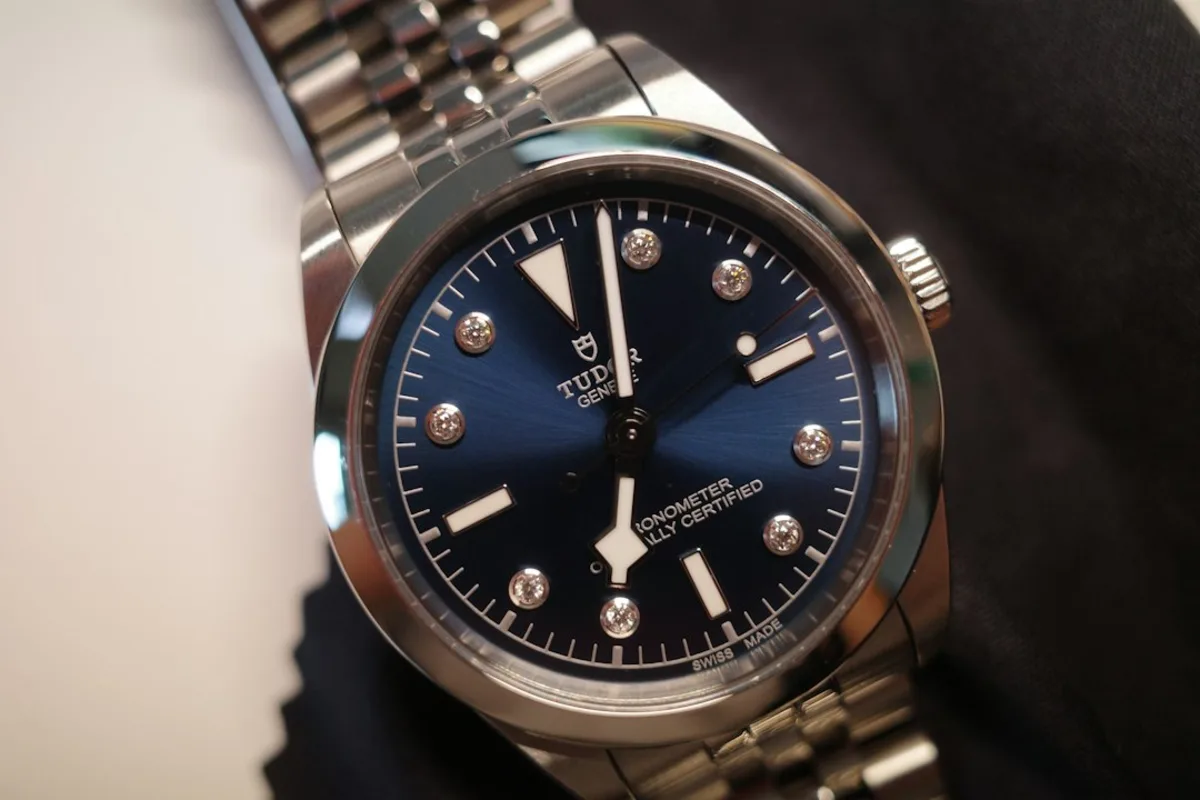
Tudor Black Bay 54 vs 58 vs 41: Which Size Is Right?
Tudor now makes its Black Bay diver in four sizes, and recent updates have changed the movements too. Here is how the 54, 58 and 41 really differ, and where the new 68 fits.
Rolex Submariner vs Omega Seamaster Diver 300M
Two of the most famous dive watches ever made, both rated to 300 metres, both with ceramic bezels. On paper they are closer than their reputations suggest. Here is where they really differ.

Zelos Watches: Singapore Microbrand With Unusual Materials
Zelos is a Singapore microbrand famous for exotic dials and case materials at accessible prices. We went through its catalogue, movements, sizes and policies.