Patek Philippe Nautilus vs Audemars Piguet Royal Oak: A Fair Fight
Two Gerald Genta designs, one steel obsession. Here's an honest look at how the Nautilus and Royal Oak actually differ, once you get past the hype and the waiting lists.
About this article: this is an informational article based on public sources: manufacturer specifications, published hands-on reviews by other outlets, owner feedback and current prices. We have not tested the watch ourselves, we are watch enthusiasts rather than professional journalists, and nothing here is buying advice. No brand paid for it. Our method

📑 Table of Contents
There's a very specific kind of argument that happens in watch forums and, increasingly, in pubs where nobody involved could actually buy either watch this year. Nautilus vs Royal Oak. It's the wristwatch equivalent of arguing about which Beatle was best, except both Beatles were designed by the same bloke within about four years of each other.
That bloke was Gerald Genta, and the fact that he designed the two most hyped steel sports watches on earth is either the best or worst thing to happen to his legacy, depending on your mood. The Royal Oak came first, in 1972. The Nautilus followed in 1976, reportedly sketched by Genta on a napkin in a hotel restaurant during the Basel watch fair, which is one of those watch industry stories so good it's survived decades of repetition regardless of whether every detail holds up.
Both watches took the unthinkable idea of a luxury sports watch in steel, at a time when steel was for tool watches and gold was for anything you wanted to be taken seriously in, and made it the standard everyone else has been chasing since. The Rolex Submariner did rugged. Genta did rugged and dressed it in a tuxedo.
Design
Side by side, you'd never confuse them, which is impressive given how often people lump them together as "posh steel watches with visible screws."
The Royal Oak is all geometry. The octagonal bezel, held down by eight visible hexagonal screws, is the whole point. It looks engineered rather than styled, like someone took a porthole and ran it through an industrial design brief. The tapisserie dial (that waffle-like guilloché pattern) catches light in a way that photographs never quite capture, and depending on who you ask it either looks technical and precise or slightly like graph paper. I lean towards precise.
The Nautilus is softer. The case is shaped like a ship's porthole with two "ears" at the sides where the bracelet meets the case, a detail that's become as recognisable as the Oak's screws. The dial has horizontal embossed grooves rather than a waffle pattern, and the whole thing reads calmer. Less "look at my engineering," more "I've already made my point and I don't need to shout."
Both use integrated bracelets, meaning the bracelet is part of the design language rather than an afterthought bolted onto lugs, and both bracelets taper elegantly towards the clasp. This is a big part of why they wear so differently to something like a Speedmaster or a Black Bay, where the bracelet is very obviously a separate component doing its own thing.
Movement
Both brands make their own movements in-house, which is where the real money in these watches goes, even if most owners will never see the caliber outside of a service centre or a very patient dealer's loupe.
The current Royal Oak 15510 runs on AP's caliber 4302, a self-winding movement with a date function and, according to AP's own published specifications, a healthy power reserve for a watch this thin on the wrist. It's a modern, robust movement built with an eye on serviceability, which matters more than people think when you're spending this kind of money and expect to keep the watch for decades.
The Nautilus 5711, before Patek discontinued it, used caliber 26-330 S C, an automatic movement finished to Patek's own internal standards (not Geneva Seal, since Patek walked away from that certification some years back in favour of their own Patek Philippe Seal). It's a beautifully finished movement, the kind of thing that photographs well through a caseback, and the 5711 shows it off through a sapphire display caseback, unlike the solid-backed original 3700.
Neither movement will out-perform a Rolex 3235 for raw shock resistance and low-maintenance reliability, and neither is trying to. This is haute horlogerie playing in sports watch clothing. You're paying for finishing, heritage and the in-house engineering story as much as timekeeping.
Daily Wearability
On paper the two are close. The Royal Oak 15510 sits at 41mm, the Nautilus 5711 at 40mm, and both are worn thinner than their diameter suggests thanks to how the case tapers and how the bracelet integrates.
Water resistance is one of the more interesting quiet differences. The Nautilus 5711 is rated to 120 metres, genuinely usable for swimming, which is unusually generous for a watch this dressy. The Royal Oak 15510 is rated to 50 metres, fine for rain and washing your hands, less fine for anything more ambitious. Neither is a dive watch and nobody buying one is choosing it over a Submariner for a diving trip, but if you wanted a single watch that could survive a pool holiday and a boardroom in the same week, the Nautilus edges it.
Both wear beautifully under a shirt cuff thanks to how thin and tapered they are, and both slip over a wrist with none of the top-heavy feel you sometimes get with chunkier integrated bracelet watches. The AP has slightly sharper edges on the case, which some people love for the tactile engineering feel and others find catches on cuffs more than the smoother Nautilus case.
Value
Here's where I have to be careful, because both watches have spent the last several years disconnected from anything resembling normal pricing logic.
At retail, the two sit in a broadly similar tier, deep into luxury watch territory, the kind of number that buys a very nice car if you spent it elsewhere. But retail price is almost a fiction for both models. Waiting lists at boutiques have run for years, and the secondary market has, at various points, priced steel examples of both watches at multiples of their original retail price. The discontinued Nautilus 5711 in blue dial became something close to a meme in watch circles, changing hands for eye-watering premiums purely because Patek stopped making it and everyone assumed, correctly, that scarcity plus hype equals madness.
The Royal Oak has generally traded a little closer to sanity on the secondary market, though "a little closer to sanity" in this context still means well above retail for the more desirable references. Neither watch is a rational purchase in the way a Tudor Black Bay or a Seiko 5 Sports is rational. You're not buying either of these for value in the sense that matters to most people buying watches. You're buying into a design story and a scarcity story that happen to be wrapped around genuinely excellent watchmaking.
Who Each Is For
The Royal Oak suits someone who wants the engineering visible and unapologetic. It photographs like a piece of industrial design because that's essentially what it is. If you're the sort of person who reads spec sheets and appreciates visible screws doing visible work, this is your watch.
The Nautilus suits someone who wants the same pedigree with a softer hand. It's the quieter flex, the watch that reads as expensive to people who know and simply nice to people who don't. If you want something that works equally well at a wedding and on a beach holiday, the Nautilus's water resistance and softer lines make the case for it.
Neither is a first luxury watch in any practical sense. If you're building towards one of these, something like an Omega Speedmaster or a well-chosen vintage piece makes a lot more sense as a stepping stone, both financially and in terms of understanding what you actually want from a dress-sports watch before you commit to a five-figure decision with a years-long waiting list attached.
The Bottom Line
I don't think there's a wrong answer here, which is a slightly unsatisfying thing to say after two thousand words, but it's true. Genta designed two versions of the same brilliant idea and gave each one a different personality. The Royal Oak is the engineer's watch. The Nautilus is the diplomat's watch. Both have been inflated by hype well beyond what either brand originally intended, and both will likely outlast the current mania and settle into being simply excellent watches again, the way most hyped things eventually do.
If I had to choose, and I don't, because I'd need a small fortune and several years of patience with a boutique manager, I'd lean Nautilus for the water resistance and the quieter design. But I understand entirely why plenty of serious collectors would call that heresy and reach for the Oak instead.
⚙️ Specifications
✅ Pros
- +Both feature genuinely excellent in-house movements with strong finishing
- +Integrated bracelet design makes both far more comfortable than their case size suggests
- +Nautilus offers unusually strong water resistance for a dress-sports watch
- +Royal Oak's design language remains distinct and instantly recognisable
❌ Cons
- −Secondary market pricing on both has been detached from retail for years
- −Waiting lists at boutiques can run for years with no guarantee of allocation
- −Neither offers the shock resistance or easy servicing of a tool watch like a Submariner
- −The steel 5711 has been discontinued, so buying one now means the secondary market
Written by
RevieWatches Editorial Team
RevieWatches is an independent, informational watch site. We research specifications, track pricing across retail and grey markets, and summarise what published...
More in Luxury
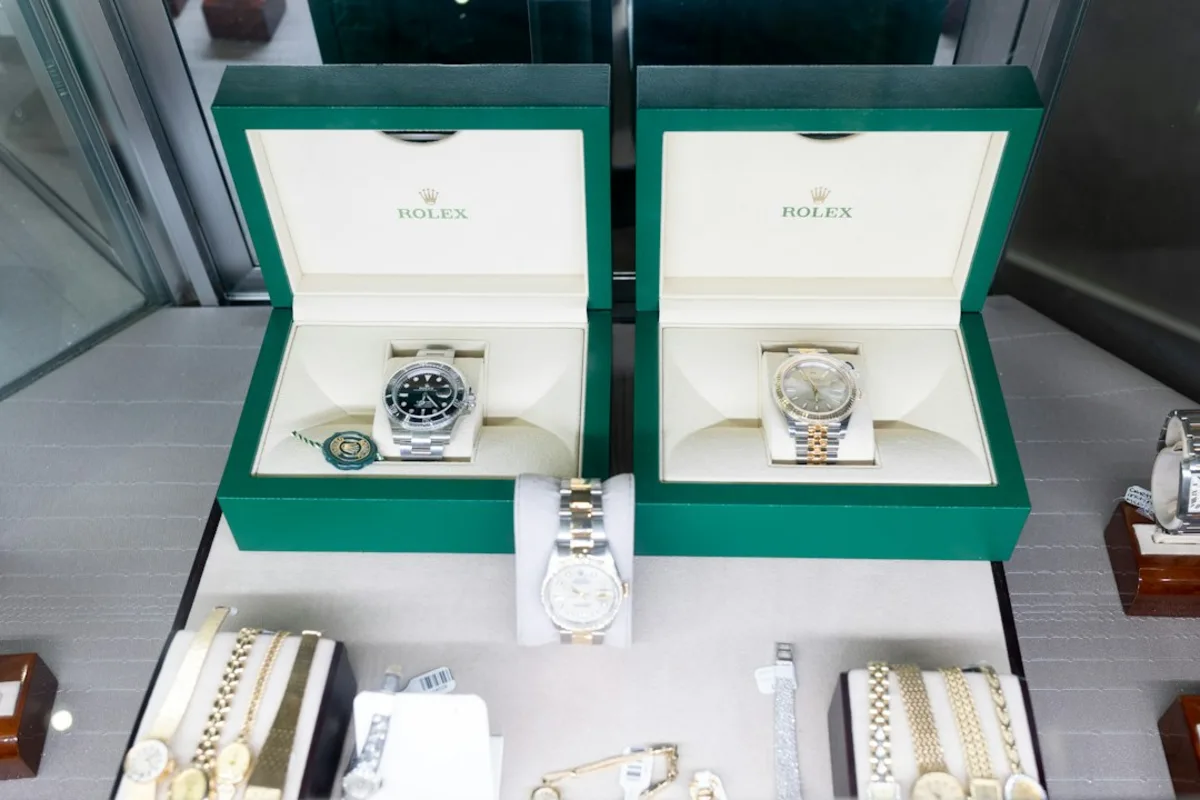
How to Buy a Rolex at Retail: Waiting Lists Explained
Buying a Rolex at list price isn't impossible, it's just slow, political, and nothing like buying any other watch. Here's how the waiting list game actually works.

Farer Watches: British Design, Swiss Movements, Bold Colour
Farer is an independent British brand making colourful, Swiss-made watches sold direct. We looked at its movements, sizes, prices, guarantee and returns.
AIS Watches: Is This Pre-Owned Luxury Dealer Legit?
AIS Watches is an Atlanta dealer in pre-owned and new luxury watches with a strong review record. Its payment and return terms put more risk on the buyer than big platforms, so here is how to buy safely.