Watch Strap Guide: NATO, Rubber, Leather or Bracelet?
Changing the strap is the fastest way to change how a watch looks and feels. Here are the main watch strap types, what each is good for, and how to pick the right size.
About this article: this is an informational article based on public sources: manufacturer specifications, published hands-on reviews by other outlets, owner feedback and current prices. We have not tested the watch ourselves, we are watch enthusiasts rather than professional journalists, and nothing here is buying advice. No brand paid for it. Our method
📑 Table of Contents
Understanding the different watch strap types is one of the easiest ways to get more from a watch you already own. A new strap can turn a dive watch into something dressier, make a dress watch more casual, or make any watch more comfortable in summer. This guide covers the main options and how to choose.
First: Measure Your Lug Width
Lug width is the distance between the lugs where the strap attaches, measured in millimetres. Common sizes are 18mm, 20mm and 22mm. You can usually find it in the watch's specifications, or measure it carefully with a ruler or calipers. A strap must match this width exactly to fit properly.
Steel Bracelet
A metal bracelet is durable, water friendly and suits most sports watches. Quality varies widely: solid links and solid end links feel sturdier than folded ones, and a clasp with micro-adjustment makes it much easier to get a comfortable fit as your wrist changes through the day.
Best for: everyday wear, sports watches, swimming.
Leather
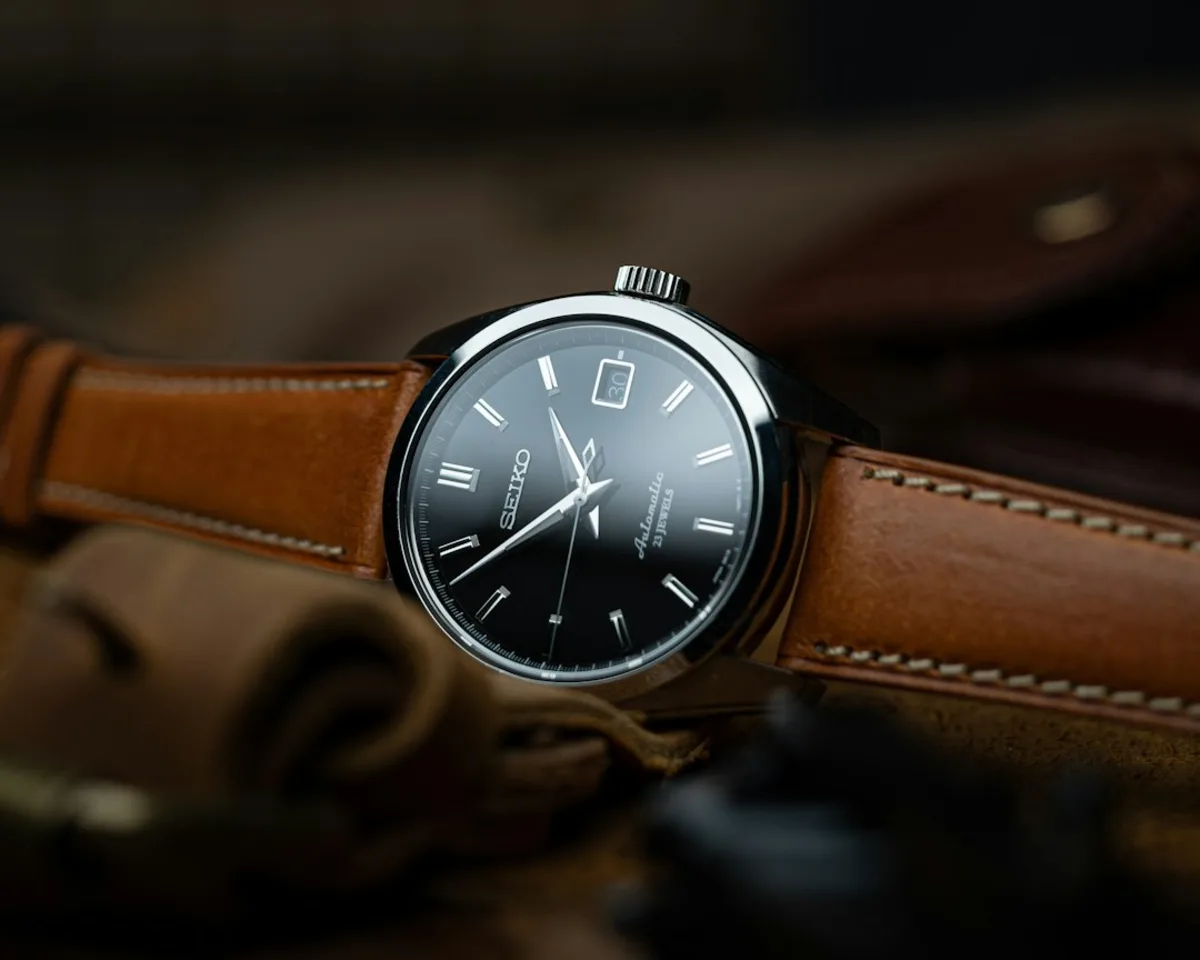
Leather is the classic choice for dress watches and adds warmth to almost any design. It softens and develops character with wear, but it does not like water, sweat or heat, which shorten its life.
Best for: dress watches, office wear, cooler weather.
Rubber and Silicone
Rubber straps are waterproof, comfortable and easy to clean. Good quality rubber, especially vulcanised rubber or FKM, resists attracting dust and holds its shape well. Rubber is the most practical option for swimming, diving and exercise.
Best for: dive watches, sport, hot weather.
NATO Straps
A NATO strap is a single piece of woven nylon that threads under the watch and through both spring bars. Its design means that if one spring bar fails, the watch stays attached. NATO straps are cheap, colourful, washable and fast to change.
The trade-off is thickness: the extra layer under the case lifts the watch slightly higher on the wrist.
Best for: field watches, casual wear, experimenting with colour.
Other Fabric Straps
- Two-piece nylon or canvas: a flatter alternative to the NATO, with a traditional buckle.
- Perlon: woven nylon that can be adjusted to any hole, breathable and light.
- Elastic or parachute straps: stretchy, comfortable and adjustable, popular on tool watches.
Quick Release Spring Bars
Many modern straps come with quick release spring bars, a small lever that lets you change the strap without tools. They make switching straps easy and reduce the risk of scratching the lugs.
Matching Straps to Watches
- Dive watches: rubber, steel bracelet or NATO.
- Dress watches: leather, ideally thin and tapering.
- Field and pilot watches: canvas, leather or NATO.
- Chronographs: leather, rubber or bracelet, depending on the watch's character.
A Note on Tapering
Many straps narrow from the lugs to the buckle, for example from 20mm to 16mm. A tapered strap looks more elegant and is often more comfortable on smaller wrists.
The Bottom Line
Know your lug width, choose a material that suits what you do, and do not be afraid to experiment. A few inexpensive straps are one of the most affordable ways to make one watch feel like several.
Related reading
- How to Pick the Right Watch Size for Your Wrist (Without Guessing)
- How to Wear a Watch With a Suit (Without Looking Like a Tourist)
- How to Clean a Watch and Bracelet Without Damaging It
Frequently Asked Questions
How do I know what size strap my watch needs?
Check the lug width, the distance between the lugs in millimetres. Common sizes are 18mm, 20mm and 22mm. The strap must match that width exactly.
Are NATO straps good?
They are cheap, washable, colourful and secure, since the watch stays attached if one spring bar fails. The trade-off is extra thickness under the case, which lifts the watch slightly.
What is the best strap for swimming?
Rubber or a steel bracelet. Leather should be kept away from water, and fabric straps take time to dry.
What are quick release spring bars?
Spring bars with a small lever that let you change a strap by hand without tools, reducing the risk of scratching the lugs.
Written by
RevieWatches Editorial Team
RevieWatches is an independent, informational watch site. We research specifications, track pricing across retail and grey markets, and summarise what published...
More in Editor's Choice
How to Clean a Watch and Bracelet Without Damaging It
A watch worn every day collects sweat, skin and grime, especially in a steel bracelet. Cleaning it takes minutes if you use the right method, and a few mistakes can cause real damage.
How to Wind and Set a Mechanical Watch Correctly
Winding and setting a mechanical watch takes seconds, but a few common mistakes can cause damage. Here is the correct way to do it, step by step.
Automatic vs Manual Watch: Which Movement Suits You?
Both are mechanical, both use a mainspring, and both need no battery. The difference is how the mainspring gets wound, and that small detail changes how the watch fits into your life.