Best Watches for Running in 2026: 7 That Actually Work
From budget trackers to £500 running computers, here's a researched look at the watches that consistently earn praise from runners for training and race day.
About this article: this is an informational article based on public sources: manufacturer specifications, published hands-on reviews by other outlets, owner feedback and current prices. We have not tested the watch ourselves, we are watch enthusiasts rather than professional journalists, and nothing here is buying advice. No brand paid for it. Our method
📑 Table of Contents
There is no shortage of running watches on the market, and plenty of them end up abandoned in a drawer after a couple of runs while others stay in rotation for years. This guide isn't a spec-sheet regurgitation. It's a look at the watches that reviewers and owners consistently rate highly for actual running use, based on published specifications and widely reported experience rather than marketing copy.
What Makes a Running Watch Worth Wearing
Let's be honest about what runners actually need. GPS accuracy matters, but you don't need military-grade precision to track a 5K. Battery life is crucial if you're doing ultras, less so for half-marathon training. Comfort trumps everything. A watch that bounces or chafes by mile three isn't a running watch, it's a wrist ornament.
It's also worth being sceptical of features most runners never touch. Breadcrumb navigation? Useful if you run remote trails. For most people pounding suburban pavements, it's bloat. What matters most: accurate pace, heart rate readings that don't spike unrealistically during an easy jog, and data that's actually readable mid-stride without stopping.
1. Garmin Forerunner 265
This is widely regarded as one of the best all-rounders in the current lineup. The AMOLED screen is a genuine step up from Garmin's older transflective displays, and reviewers consistently note it's far easier to read in full sun. Battery life is rated at around ten days with daily GPS use, which in practice means a single weekly charge for most runners.
The training readiness feature is one of the more useful additions Garmin has made recently. It draws on HRV, sleep, and training load to flag when a runner is under-recovered, and owners commonly report that ignoring its "low readiness" warnings tends to correlate with niggles and strains. It's not magic, just solid pattern recognition, but it's the kind of feature that earns trust over time.
Downsides worth noting: it's not cheap at around £430. The stock silicone strap is reported to hold onto sweat and odour over time, which is why many owners swap it for an aftermarket nylon band. And Garmin's companion app is powerful but cluttered, requiring some setup to quieten notifications about metrics you don't care about.
Best for: Serious runners who want proper training metrics without spending Fenix money. This hits the sweet spot between the basic 55 and the overwrought 965.
2. Coros Pace 3
Coros has closed the gap on Garmin considerably, and the Pace 3 is a strong case for it. At around 30g with the nylon strap, it's among the lightest running watches on the market, and low weight is consistently cited by reviewers as a factor that makes a watch disappear on the wrist during long runs.
Battery life is exceptional, with claims of multiple weeks between charges under regular running use. The optical heart rate sensor is reported by reviewers to be accurate enough that some runners stop bothering with a chest strap even for tempo sessions. At around £200, it undercuts the Garmin significantly while covering most of what the average runner actually needs.
The companion app is generally described as cleaner and less cluttered than Garmin's, with simplified but still useful training load metrics. The trade-off is a smaller ecosystem, though for most runners the extra depth Garmin offers isn't essential.
The main criticism levelled at the Pace 3 is its screen, which is functional but dim, better suited to morning light than harsh afternoon sun. The button-based interface also takes some adjustment for anyone used to touchscreens. Neither is a dealbreaker given the price.
Best for: Runners who want accuracy and battery life without paying the Garmin tax. Perfect first serious running watch.
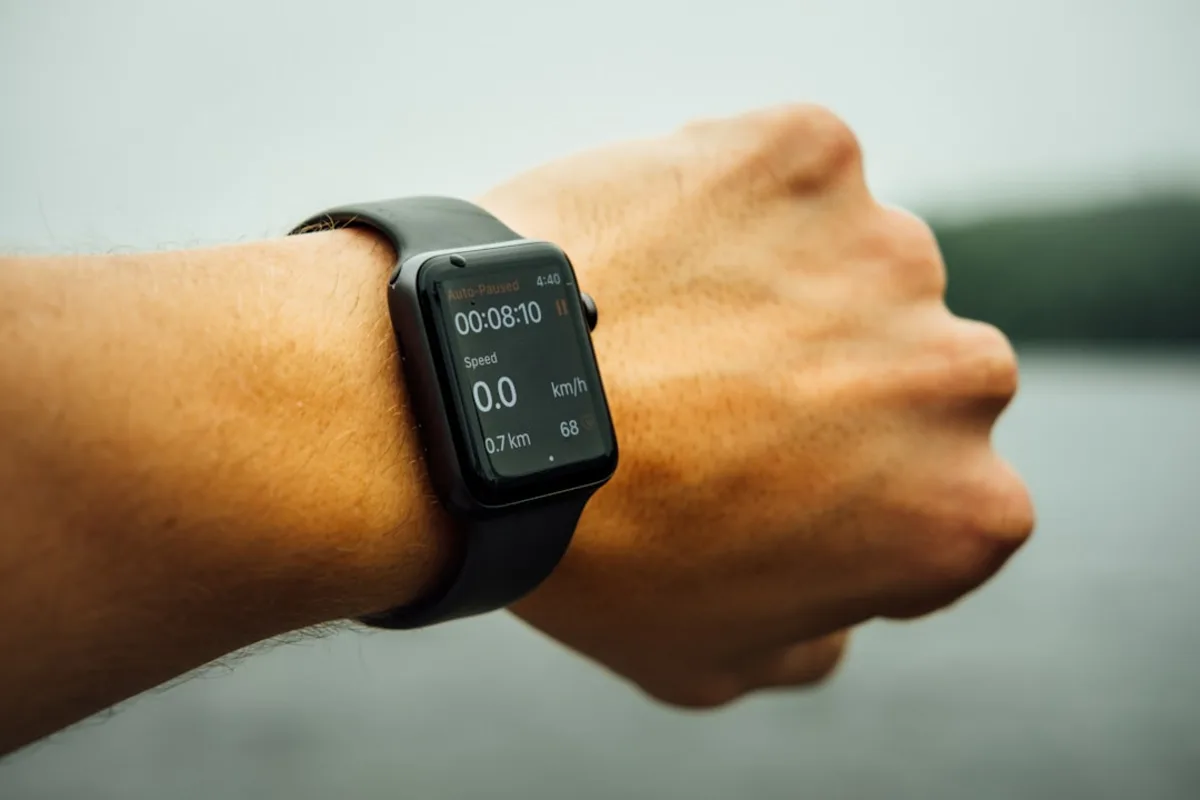
3. Apple Watch Ultra 2
It's a fair claim now that the Ultra 2 is a legitimately competitive running watch, a turnaround from earlier Apple Watches that struggled with battery life on longer runs. Apple's own figures and independent reviews suggest it can handle a long run with GPS and music streaming and still have substantial battery left.
The action button is a genuinely well-liked addition, commonly mapped to start workouts and reducing reliance on touchscreen swipes. The dual-frequency GPS is regarded as among the most accurate available in dense urban environments, where signal reflection off buildings often causes wandering GPS tracks on other watches.
The trade-off is that it's still fundamentally a smartwatch, meaning notifications and apps are baked in unless deliberately switched off. At around £800 it's a considerable outlay if running is the only use case. For those already embedded in the Apple ecosystem who want one watch for everything, it makes more sense than buying a dedicated running watch on top.
The screen quality draws consistent praise, third-party apps like WorkoutDoors add customisation, and Strava sync is seamless. It's not positioned to match Garmin's training-specific insight, though.
Best for: iPhone users who want one good watch for everything. Runners who value screen quality and ecosystem integration over battery life.
4. Polar Pacer Pro
Polar doesn't get talked about as much as Garmin or Coros, but its heart rate accuracy is still widely regarded as best in class among wrist-based sensors. Independent comparisons against chest straps commonly find Polar's readings tracking within a few beats per minute, a level of consistency that wrist sensors from other brands don't always match.
The Pacer Pro is deliberately stripped back: a barometric altimeter, route guidance, and training load tracking, with no music storage, no contactless payments, and no smartwatch pretensions. It reads as a running computer that happens to tell the time.
Its Hill Splitter feature is well regarded by trail runners, automatically separating ascent and descent pace data, which is useful for pacing steep climbs without overexerting early. It's the kind of feature that shows up favourably in reviews focused on fell and hill running.
Battery life is solid at a claimed 35 hours of GPS use, though the screen is basic and clearly a step below Garmin or Coros in terms of polish. At £300 it sits awkwardly between the Coros and Garmin on price, but for anyone prioritising heart rate accuracy, such as structured zone training, it remains a strong option.
Best for: Runners obsessed with accurate heart rate data. Anyone doing structured training where zones actually matter.
5. Garmin Forerunner 55
The sensible, unglamorous choice, and arguably the entry point most new runners should start with. It covers the basics without frills: GPS, pace, distance, heart rate. No AMOLED, no maps, no music, just running.
It's widely recommended as a first "proper" running watch precisely because it's simple and reliable, without the troubleshooting overhead of pricier models. At around £160 on sale, it's accessible without feeling like a compromise for anyone just building a running habit.
The screen is dim by modern standards and the plastic case feels basic, both frequently mentioned in reviews, but neither seems to affect core functionality. Battery life is rated at around two weeks, long enough that charging rarely becomes a chore.
The suggested workouts feature is often singled out as surprisingly good value for a budget device. For anyone who later upgrades to something more advanced, the 55 tends to get repurposed as a spare for muddy trail runs rather than retired outright.
Best for: New runners. Anyone who wants reliable basics without feature bloat or a £400 price tag.
6. Suunto Race
Suunto has historically leaned towards rugged, outdoorsy design, but the Race marks a shift towards something that works as an everyday watch too, with a proper AMOLED screen and a sleeker case than its predecessors.
The offline maps are consistently highlighted as one of its strongest features, letting runners navigate unfamiliar cities on foot without phone signal or data roaming. It's a practical feature for travel running rather than a flashy one.
Training metrics lean heavily on Suunto's partnerships with platforms like TrainingPeaks. For runners already using those ecosystems, integration is reported to be excellent. For those who aren't, the native tools feel thinner than Garmin's.
Battery life is the main weak point, rated at around a week with daily running, which is respectable but unremarkable. At £450 it's priced similarly to the Garmin 265 while offering arguably less training depth, though it's frequently praised as the best-looking watch of the group.
Best for: Runners who care about design. Anyone who wants offline maps for travel running.
7. Amazfit Cheetah Pro
The wildcard of the list. Amazfit is a Chinese brand, priced suspiciously low at around £200, yet reviewed as surprisingly competent for the money.
Dual-band GPS is generally reported as accurate, the AMOLED screen is bright and legible, and battery life is rated at around two weeks. The physical rotating bezel is a nice touch reviewers tend to mention favourably. Zepp Coach, its AI-driven training plan feature, is described by some reviewers as genuinely decent, better than expected at this price point.
The catch is that data tends to stay within Amazfit's own ecosystem unless exported manually, with no seamless Strava sync. The app has been criticised as functional but clunky in translation, and Amazfit's track record on long-term software support for older models is patchy.
Even so, at £200, if it holds up for a couple of years, it represents strong value against nearly everything else on this list. It's probably not the watch to trust for a focused training block ahead of a goal race, but for general fitness running it looks like a solid, low-risk option.
Best for: Budget-conscious runners willing to compromise on ecosystem integration. Gadget enthusiasts who like trying quirky brands.
What Stands Out
For an all-round pick, the Garmin Forerunner 265 looks like the strongest complete package without Fenix-level expense or complexity.
For value, the Coros Pace 3 is hard to beat on a price-to-performance basis.
For anyone already committed to Apple's ecosystem, the Ultra 2 is a legitimately viable running watch now, even if it's an expensive way to get there.
None of these watches are flawless. Each has quirks and trade-offs, and no single model works for every runner. But based on specifications, owner feedback and reviewer consensus, these seven consistently stand out as watches worth considering for training and race day.
Written by
RevieWatches Editorial Team
RevieWatches is an independent, informational watch site. We research specifications, track pricing across retail and grey markets, and summarise what published...
More in Sports Watches
Casio G-Shock Buying Guide: Which Series Is Right for You?
Casio's G-Shock range runs from ten-quid resin squares to four-figure titanium dive watches. Here's how to work out which tier actually suits how you live, not just how it looks on a wrist shot.
TAG Heuer Carrera vs Omega Speedmaster: Which Chronograph Wins?
Two of the most important chronographs in watchmaking, one built for the racetrack and one built to go to the moon. Here's how the Carrera and Speedmaster actually stack up.
TAG Heuer Carrera: The Chronograph That Finally Gets It Right
After years of wandering, TAG Heuer's new Carrera returns to Jack Heuer's 1963 vision. Here's a close look at the 39mm Calibre TH20-00 version and what actually matters.