Rolex Explorer vs Explorer II: Which One Is for You?
They share a name, but the Explorer and Explorer II are very different watches. One is a pared-back three-hander, the other a 42mm GMT with a fixed 24-hour bezel.
About this article: this is an informational article based on public sources: manufacturer specifications, published hands-on reviews by other outlets, owner feedback and current prices. We have not tested the watch ourselves, we are watch enthusiasts rather than professional journalists, and nothing here is buying advice. No brand paid for it. Our method
📑 Table of Contents
The Rolex Explorer vs Explorer II comparison is really a comparison between two different kinds of watch that happen to share a name. The Explorer is one of the simplest watches Rolex makes. The Explorer II is a 42mm GMT with a second time zone and a date. Knowing what each is designed for makes the choice much easier.
A Little History
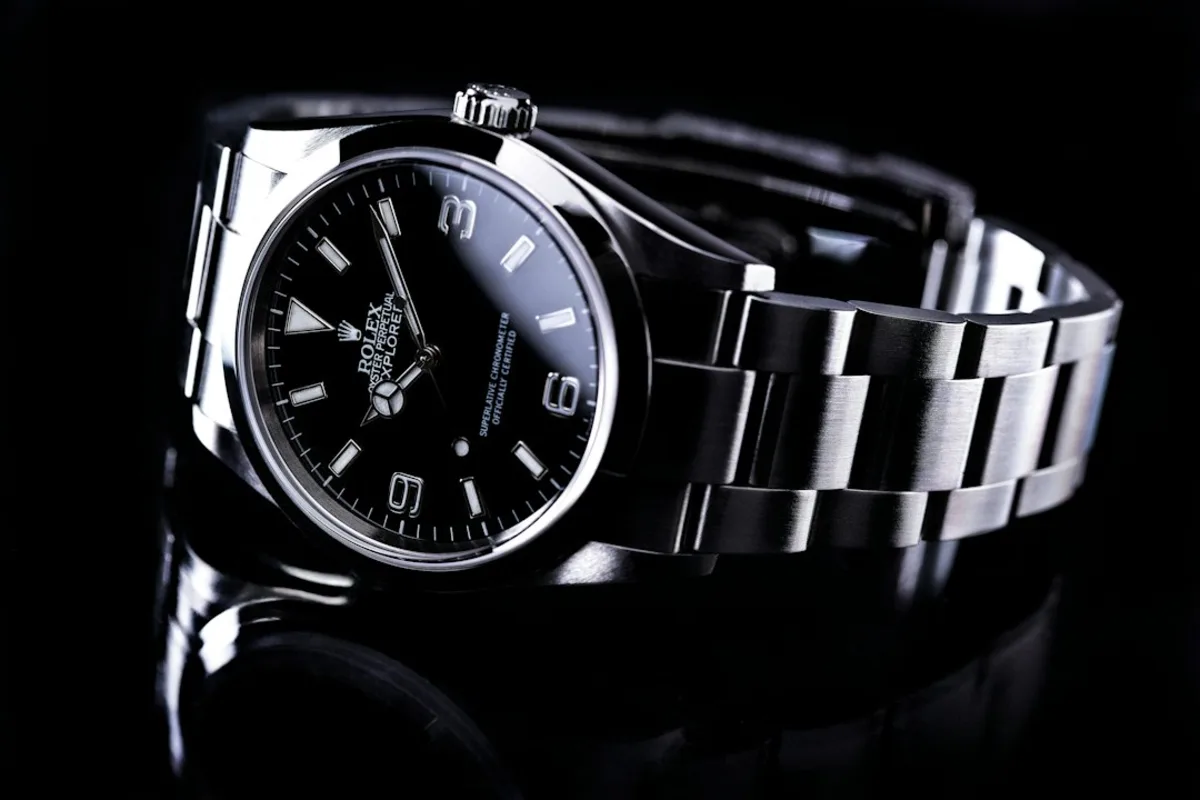
The Explorer was introduced in 1953, the year of the first successful ascent of Everest, and Rolex has long linked the model to mountaineering and exploration. Its signature is the black dial with large 3, 6 and 9 numerals, designed for quick reading in difficult conditions.
The Explorer II followed in 1971, aimed at explorers working in environments without day and night, such as caves and polar regions. Its 24-hour hand and fixed 24-hour bezel make it possible to tell AM from PM at a glance, and in later generations to track a second time zone.
The Current Explorer: 36mm and 40mm
Rolex currently offers the Explorer in two sizes. The 124270 returned to the classic 36mm diameter in 2021, and the 224270 offers a 40mm alternative. Both use the calibre 3230, a time-only automatic movement with a 70-hour power reserve, and both are water resistant to 100 metres.
The Explorer has no date, no rotating bezel and no extra complications. That simplicity is exactly the point. It is a watch built to tell the time clearly and survive almost anything, and many people see it as the purest expression of what a Rolex sports watch is.
The Current Explorer II: 42mm GMT
The Explorer II, reference 226570, measures 42mm and runs the calibre 3285, the same GMT movement family used in the GMT-Master II, with a 70-hour power reserve. It has a date at 3 o'clock with a Cyclops magnifier, an orange 24-hour hand and a fixed steel bezel engraved with a 24-hour scale. It is also water resistant to 100 metres, and is offered with a white or a black dial.
Because the bezel is fixed, the Explorer II tracks two time zones rather than three. The local hour hand can be jumped forward or back in one-hour steps without stopping the watch, which makes it practical for travel.
Key Differences
- Size: Explorer 36mm or 40mm, Explorer II 42mm.
- Movement: Explorer calibre 3230, time only. Explorer II calibre 3285, GMT with date.
- Functions: the Explorer II adds a date and a second time zone.
- Bezel: smooth bezel on the Explorer, fixed engraved 24-hour bezel on the Explorer II.
- Character: the Explorer is understated and dressy enough for a suit. The Explorer II is larger and more overtly a tool watch.
Who Should Buy the Explorer?
The Explorer suits someone who wants one watch for everything and values restraint. The 36mm version in particular is one of the most versatile watches Rolex makes, equally at home with a T-shirt or a jacket. If you rarely need a date or a second time zone, it is hard to argue against.
Who Should Buy the Explorer II?
The Explorer II suits frequent travellers who want a GMT but prefer something less colourful than a GMT-Master II, and people with larger wrists who find 36mm or 40mm too small. The white "polar" dial is one of the most distinctive sports dials Rolex offers.
Availability
Both models have historically been easier to obtain at retail than a Submariner or GMT-Master II, though demand for all Rolex steel sports watches remains high. It is worth asking an authorised dealer directly before assuming either is unavailable.
The Bottom Line
I think the Explorer is the better everyday watch and the Explorer II is the better tool. If you can only have one and do not travel across time zones often, the Explorer's simplicity is its greatest strength. If you do, the Explorer II earns its extra size.
Related reading
- Rolex Submariner 126610LN Review: The Icon Examined
- Best Rolex Watches in 2026: 6 Models Actually Worth Buying
- GMT vs Worldtimer vs Dual Time: Which Travel Watch Do You Actually Need?
Frequently Asked Questions
What is the difference between the Rolex Explorer and Explorer II?
The Explorer is a time-only watch in 36mm or 40mm with no date. The Explorer II is a 42mm GMT with a date, an orange 24-hour hand and a fixed 24-hour bezel for tracking a second time zone.
What movement is in the Rolex Explorer?
The current Explorer 124270 and 224270 use the calibre 3230, an automatic time-only movement with a 70-hour power reserve.
Is the Explorer II a GMT watch?
Yes. It uses the calibre 3285, the same GMT movement family as the GMT-Master II, with an independently adjustable local hour hand.
Is the Explorer water resistant?
Both the Explorer and the Explorer II are water resistant to 100 metres.
⚙️ Specifications
✅ Pros
- +Explorer: pure, versatile design in 36mm or 40mm
- +Explorer: 70-hour reserve and 100m water resistance
- +Explorer II: practical GMT with jumping local hour hand
- +Explorer II: distinctive white polar dial option
❌ Cons
- −Explorer: no date or second time zone
- −Explorer II: 42mm will be large for some wrists
- −Explorer II: fixed bezel means only two time zones
- −Both: demand for Rolex steel sports watches can mean waiting
Written by
RevieWatches Editorial Team
RevieWatches is an independent, informational watch site. We research specifications, track pricing across retail and grey markets, and summarise what published...
More in Sports Watches
Casio G-Shock Buying Guide: Which Series Is Right for You?
Casio's G-Shock range runs from ten-quid resin squares to four-figure titanium dive watches. Here's how to work out which tier actually suits how you live, not just how it looks on a wrist shot.
TAG Heuer Carrera vs Omega Speedmaster: Which Chronograph Wins?
Two of the most important chronographs in watchmaking, one built for the racetrack and one built to go to the moon. Here's how the Carrera and Speedmaster actually stack up.
TAG Heuer Carrera: The Chronograph That Finally Gets It Right
After years of wandering, TAG Heuer's new Carrera returns to Jack Heuer's 1963 vision. Here's a close look at the 39mm Calibre TH20-00 version and what actually matters.