Casio G-Shock Buying Guide: Which Series Is Right for You?
Casio's G-Shock range runs from ten-quid resin squares to four-figure titanium dive watches. Here's how to work out which tier actually suits how you live, not just how it looks on a wrist shot.
About this article: this is an informational article based on public sources: manufacturer specifications, published hands-on reviews by other outlets, owner feedback and current prices. We have not tested the watch ourselves, we are watch enthusiasts rather than professional journalists, and nothing here is buying advice. No brand paid for it. Our method
📑 Table of Contents
- Start With Honesty About What You Actually Need
- The Classic Square: DW-5600 and Friends
- The GA-2100 "CasiOak": Design First, Toughness Second
- The Full Metal Square: GMW-B5000
- Mudmaster, Rangeman and the Tool Watch Tier
- Frogman: The Dive Watch G-Shock Nerds Actually Want
- MT-G and GPW: G-Shock in a Suit
- Solar, Radio Sync and Battery: The Boring Bit That Matters
- How G-Shock Fits Next to "Real" Watches
- Where and How to Buy
- The Short Version
This G-Shock buying guide starts with one of the best origin stories in watchmaking, and it's a genuinely documented one, not marketing fluff. Casio engineer Kikuo Ibe reportedly got so fed up with watches breaking on him that he spent ages dropping prototypes out of a window until one survived the fall onto concrete. That watch became the original DW-5000C in 1983, and the whole G-Shock philosophy still comes from that: build something that just doesn't die, then work out how to sell it.
Forty-odd years later, that single idea has splintered into dozens of series covering everything from affordable resin squares to metal dive watches that flirt with four-figure pricing. That's the problem. Walk into the G-Shock section of a search results page and you'll find so many model numbers it starts to feel like buying broadband. So let's sort it by what each tier is actually for.
Start With Honesty About What You Actually Need
Before series and model numbers, ask yourself one question: are you buying a tool, a design object, or a status piece? G-Shock genuinely covers all three, but not with the same watch. The resin squares are tools that happen to look good. The GA-2100 is a design object that happens to be tough. The metal MT-G and GPW pieces are Casio's attempt at status, built to sit next to something like a Rolex Submariner or a Tudor Black Bay on a shelf without looking cheap by comparison. Knowing which of those three boxes you're shopping in saves you from overpaying for finishing you don't need, or underbuying on toughness you actually do.
The Classic Square: DW-5600 and Friends
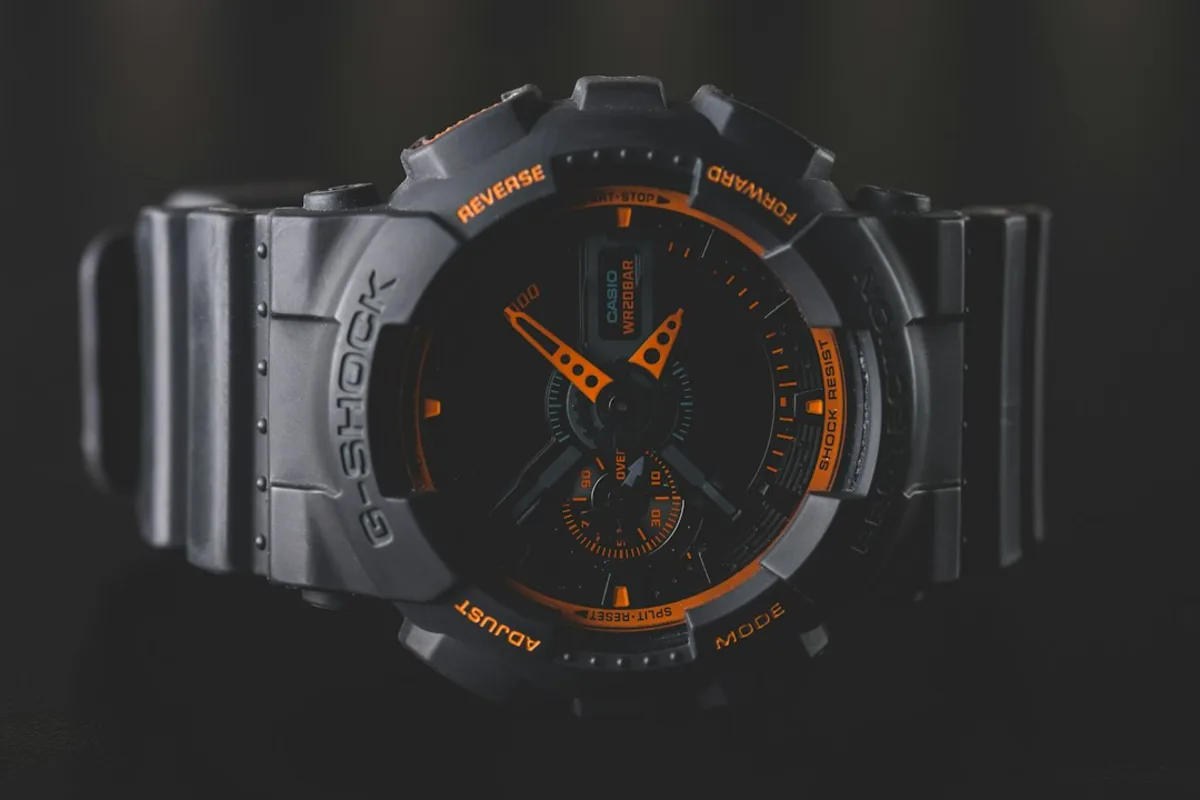
This is where G-Shock started and, honestly, where most people should start too. The DW-5600 and its close relatives are the resin, quartz, LCD-and-buttons squares that look almost identical to that original 1983 design. They're cheap, genuinely tough by any reasonable standard, and they do the basic G-Shock job without asking you to think about it. Backlight, alarm, stopwatch, done.
Price-wise you're looking at the lower end of the whole G-Shock range, closer to the cost of a round of drinks than a proper purchase decision. That makes it an easy watch to buy without agonising, and an easy watch to hand to a teenager, take on a building site, or throw in a gym bag without flinching. The trade-off is obvious: it's plastic and it looks like a calculator watch from the eighties, because it basically is one. If that retro-digital look isn't your thing, none of the toughness in the world will change your mind.
The GA-2100 "CasiOak": Design First, Toughness Second
The GA-2100, nicknamed the CasiOak by the internet almost the moment it appeared because of how much its thin bezel and integrated look echoes a certain Audemars Piguet sports watch, is the series that actually got G-Shock taken seriously by people who'd never normally look at a Casio. It's an analogue-digital hybrid, thinner and more wearable under a cuff than most G-Shocks, and it comes in enough colourways and material finishes to satisfy anyone who treats watches a bit like sneakers.
Price sits a notch above the basic square but still comfortably in budget-watch territory, similar ballpark to a decent pair of trainers. It's the one I'd point most newcomers toward if they want something that reads as a deliberate style choice rather than a tool that happens to be on their wrist. The downside is popularity itself: certain colourways get hyped, resold, and marked up by people who bought two and only wanted one, so if you see a GA-2100 going for silly money online, just wait a few weeks and buy from a proper retailer instead.
The Full Metal Square: GMW-B5000
Take the classic 5600 silhouette and reproduce it in stainless steel, add solar charging and Bluetooth connectivity, and you get the GMW-B5000, sometimes called the "Full Metal" square. It's heavier, colder to the touch, and finished properly, brushed surfaces, a case that feels like an actual watch rather than a toy. It's also the closest G-Shock gets to being a genuine grail piece for collectors, the sort of thing enthusiasts talk about the way they'd talk about a steel Omega Speedmaster: familiar shape, upgraded material, real presence.
Expect to pay several times what the resin DW-5600 costs, generally landing in the mid hundreds rather than low tens. That's still a fraction of what a Swiss steel sports watch costs, but it's a meaningful step up from anything else in the G-Shock line, and it's worth thinking about whether you want that jump before you commit. What you get for it is a watch that looks credible in a blazer, which no resin G-Shock manages, no matter how good the colourway.
Mudmaster, Rangeman and the Tool Watch Tier
If you actually work outdoors, or just want the reassurance that your watch could survive worse conditions than you're likely to put it through, this is the tier to look at. Mudmaster models are built around resistance to mud and dust ingress with oversized crowns and guards. Rangeman leans into altitude, temperature and barometric readings alongside solar charging, aimed squarely at hikers and people who take "rugged" literally rather than as an aesthetic.
These sit meaningfully above the design-led models in price, generally into the mid-to-upper hundreds, because you're paying for sensors and construction rather than just a shape. For most people living urban lives, this is more toughness and more technical readout than you'll ever use. But if you're genuinely up mountains or in the kind of conditions where a phone battery dies before lunch, this tier earns its keep in a way a CasiOak simply can't.
Frogman: The Dive Watch G-Shock Nerds Actually Want
Frogman is G-Shock's dive-focused flagship, built with genuine diving credentials rather than just water resistance as a spec-sheet line. It carries real cachet among collectors precisely because Casio doesn't release new Frogman models constantly, they're comparatively rare drops, and that scarcity plus the diving heritage pushes secondary market prices around, sometimes well past retail. If you're drawn to it, it's worth comparing mentally against something like a Rolex Submariner: wildly different construction and price bracket, but the same basic instinct, a watch built around one specific extreme use case that most owners will never actually need.
MT-G and GPW: G-Shock in a Suit
MT-G and the Gravitymaster GPW line are where Casio tries to compete with dressier tool watches. Metal cases, more refined bracelets, carbon-reinforced construction on some models, radio-controlled timekeeping via GPS on the GPW side, and finishing that's meant to be looked at up close rather than glanced at on a wrist. Prices climb into four-figure territory here, which puts them in the same conversation as entry-level Swiss sports watches, and that's a genuinely tough comparison for Casio to win on brand cachet alone, even if the tech inside is arguably more advanced.
This is the tier I'd be most cautious recommending. You're paying Swiss-adjacent money for a Japanese quartz watch with no mechanical movement and no resale prestige to speak of. If status and investment matter to you, that money probably works harder elsewhere. If you just want the most technically capable, toughest watch Casio makes and don't care what anyone else thinks about it, it's a legitimate buy.
Solar, Radio Sync and Battery: The Boring Bit That Matters
Ignore this at your peril. Basic G-Shocks run on a standard battery you'll replace every couple of years, cheaply, at any watch repair counter. "Tough Solar" models charge from light and rarely need a battery change at all, which matters if you hate the idea of a dead watch in a drawer. "Multi-Band 6" or GPS-synced models correct their own timekeeping automatically, handy if precision actually matters to you, largely irrelevant if it doesn't. None of this changes how tough the case is, so don't let a solar badge talk you into paying more than you need to if all you want is the classic square.
How G-Shock Fits Next to "Real" Watches
People sometimes ask whether a G-Shock and a mechanical watch are even in the same conversation. They're not, and that's the point. A Seiko 5 Sports or an Orient Mako II gives you a mechanical movement and real watchmaking heritage for sensible money, but you'd think twice before taking either one caving. A G-Shock gives you none of the romance of a spinning balance wheel, but you genuinely don't have to think about it at all. Plenty of people who own a Tudor Black Bay or a Speedmaster also own a G-Shock, precisely because it's the watch you wear when you don't want to worry about the good one.
Where and How to Buy
Buy from Casio directly or an authorised retailer where possible, especially on the metal MT-G, GPW and GMW-B5000 models where warranty support and genuine parts matter more. Marketplace listings for hyped colourways of the GA-2100 or discontinued Frogman references often carry a real markup over retail, so check current official pricing before assuming a "deal" is actually one. For the basic resin squares, price differences between sellers are usually small enough that convenience wins.
The Short Version
If you want a cheap, honest tool watch, buy the DW-5600. If you want something that looks deliberately chosen and works with normal clothes, buy the GA-2100. If you want a grail-adjacent piece with real material upgrade, save for the GMW-B5000. If you actually need sensors and extreme durability, go Mudmaster or Rangeman. And if you're chasing status in a Casio, the MT-G and GPW exist, but be honest with yourself about whether that money is better spent on your first proper mechanical watch instead.
Written by
RevieWatches Editorial Team
RevieWatches is an independent, informational watch site. We research specifications, track pricing across retail and grey markets, and summarise what published...
More in Sports Watches
What Is a Tool Watch? A Clear Definition
Tool watch is one of the most used and least defined terms in watch collecting. Here is what it actually means, and the features that separate a real tool from a watch that just looks like one.
Omega Speedmaster Moonwatch Buying Guide: Hesalite or Sapphire?
The Moonwatch has barely changed in decades, but the choice between versions still matters. Here is what separates the Hesalite and Sapphire Sandwich models, and the older calibres.
Rolex Explorer vs Explorer II: Which One Is for You?
They share a name, but the Explorer and Explorer II are very different watches. One is a pared-back three-hander, the other a 42mm GMT with a fixed 24-hour bezel.