How Often Should You Service a Mechanical Watch? A Practical Guide
The '5 year rule' gets thrown around a lot, but it's mostly marketing. Here's what actually determines when your watch needs a service, and what it'll cost you.
About this article: this is an informational article based on public sources: manufacturer specifications, published hands-on reviews by other outlets, owner feedback and current prices. We have not tested the watch ourselves, we are watch enthusiasts rather than professional journalists, and nothing here is buying advice. No brand paid for it. Our method
📑 Table of Contents
- Where the service interval numbers come from
- What actually happens if you skip a service
- So what's the realistic interval?
- Signs your watch actually needs a service (regardless of the calendar)
- What a service actually costs, roughly
- Does an unserviced watch actually hurt resale value?
- My actual take
Ask ten people how often to service a mechanical watch and you'll get ten different answers, most of them lifted straight from a brand's own brochure. Rolex now suggests roughly every ten years. Omega suggests five to eight. Independent watchmakers often give a different answer again. The truth is less tidy than any of those numbers suggest, because a watch sat in a drawer for most of the year ages differently to one worn daily through British winters and sweaty commutes.
So let's actually unpack this properly, because the service interval question isn't really one question. It's three: how often should you service it, what happens if you don't, and what does it actually cost.
Where the service interval numbers come from
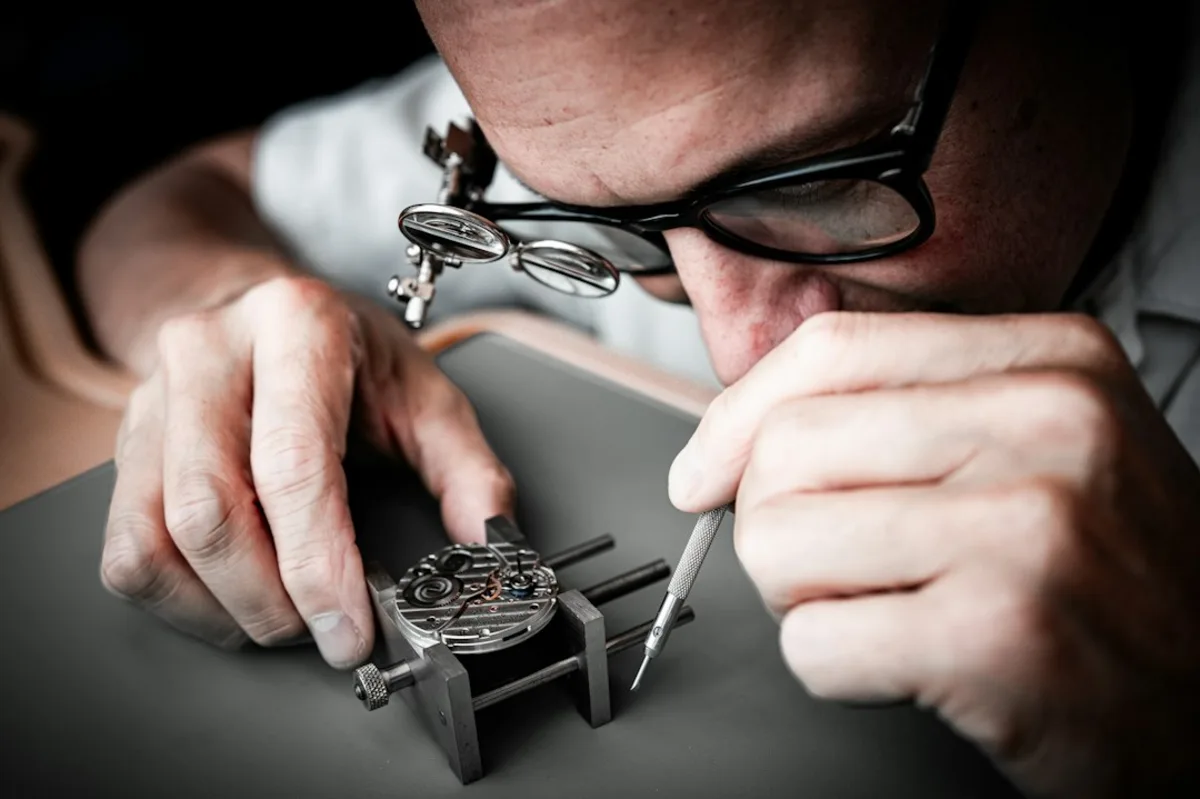
Most Swiss brands (Rolex, Omega, Tudor) quote a five to ten year service interval in their own literature. That's not a random number. It comes from how lubricants inside a movement behave over time. The oils and greases on the gear train, mainspring and escapement don't just run out, they degrade. They oxidise, thicken, and eventually turn into something closer to varnish than lubricant. Left long enough, that gunked-up lubricant does more harm than good, because it stops moving parts moving properly and starts grinding metal against metal.
The catch is that oil degradation isn't a fixed clock. It depends on:
- How much the watch is actually worn. A watch running 24 hours a day accumulates wear differently to one worn twice a month.
- Temperature and humidity. Watches that see a lot of heat, cold, or damp environments (gym bags, poolside, humid climates) stress lubricants faster.
- Movement type. Higher-frequency movements and those with more complications generally have more points of friction to worry about.
- Manufacturing tolerances. Some brands use synthetic lubricants and modern alloys that resist degradation better than watches built decades ago.
So the five-year figure is really a conservative average, rounded down to cover brands legally and reputationally. It's not wrong, but it's not gospel either.
What actually happens if you skip a service
Nothing dramatic, at first. A watch running dry doesn't just stop one day like a car engine seizing on the motorway. It degrades gradually: timekeeping drifts, the amplitude of the balance wheel drops, and the watch becomes less accurate and less consistent day to day. Owners of Seiko 5 Sports and Orient Mako II models, for instance, often report their watches running fine for a decade or more on the original oils, simply because these are robust, mass-produced calibres designed with generous tolerances and cheap enough to just replace rather than nurse along forever.
Where it gets expensive is when dried-out lubricant starts causing actual wear: metal-on-metal contact that scores pivots, wears down jewels, or damages the mainspring barrel. At that point a routine service (clean, oil, regulate) turns into a parts replacement job, and that's where costs multiply. A watchmaker I'd trust would tell you the same thing an engineer would about any machine with moving parts: little and often beats big and rare.
So what's the realistic interval?
Here's a more honest breakdown than "five years, full stop":
- High-end Swiss automatics worn regularly (Rolex Submariner, Omega Speedmaster, Tudor Black Bay): every 5-8 years is sensible. These use tighter tolerances and often see daily wear, so lubricant breakdown matters more.
- The same watches worn occasionally or rotated through a small collection: you can often stretch to 8-10 years, since less wear means less mechanical stress, though the movement should still be checked for moisture ingress and gasket condition.
- Robust workhorse automatics (Seiko 5 Sports, Orient Mako II): these are built to be serviced less fastidiously. Many owners run them for a decade or more between services without drama, partly because parts are cheap and partly because the movements (Seiko's 4R/NH-series calibres, for example) are simple and over-engineered for the price point.
- Vintage pieces: these deserve more frequent checks, not less, because old lubricants, aged gaskets and decades-old parts are a genuinely different proposition to a watch built in the last ten years.
The honest answer to "how often" is: it depends on how the watch is used, not just how old it is. A Speedmaster worn to the gym three times a week and swum in occasionally is a very different mechanical situation to the same watch kept in a drawer for special occasions.
Signs your watch actually needs a service (regardless of the calendar)
Rather than obsessing over a number, watch for the actual symptoms:
- Timekeeping drift. If a watch that used to run within a few seconds a day suddenly starts losing or gaining noticeably more, that's often the first sign of thickening lubricant increasing friction.
- Power reserve dropping. If the watch that used to run for two days on a full wind now stops after one, the mainspring or escapement efficiency has likely degraded.
- Moisture inside the crystal. Any fogging under the crystal means a gasket has failed, and that needs immediate attention, not because of the movement but because water damage to a dial or movement is often irreversible and far more expensive to fix than a routine service.
- Unusual sounds or a rougher-feeling crown. A crown that used to wind smoothly and now feels gritty is telling you something.
None of these require you to open the case yourself, obviously. They're just reasons to actually book a service rather than waiting for a specific birthday on the watch.
What a service actually costs, roughly
Costs vary enormously by brand, movement complexity and whether you go to an authorised service centre or an independent watchmaker, but here's a rough shape of the market:
- Independent watchmaker, simple automatic (something like a Seiko 5 Sports or Orient Mako II): often a low three-figure sum. These are simple, mass-produced movements with widely available parts, so labour is the main cost.
- Independent watchmaker, Swiss automatic (a Tudor Black Bay or similar): typically mid to high three figures, depending on case complexity and whether a full strip-down is needed.
- Brand authorised service, Rolex or Omega: this is where costs jump to four figures territory, particularly for anything with a chronograph module (a Speedmaster, for instance, costs more to service than a time-only Submariner because there's simply more going on mechanically). You're also paying for genuine parts, brand-specific testing rigs, and the peace of mind of a stamped service record, which matters for resale.
- Vintage or complicated pieces: costs can rise further still if parts need sourcing or fabricating, particularly for movements no longer in production.
It's worth factoring the service cost into the total cost of ownership before buying, not after. A watch that's roughly three times the price of another isn't just costing more upfront, it's often costing proportionally more every time it needs attention too.
Does an unserviced watch actually hurt resale value?
Yes, generally, though not always in obvious ways. A watch with a full service history and box and papers will usually command more on the used market than an identical one with no documentation, particularly at the higher end where buyers are wary of movements that have been neglected or, worse, opened by an unqualified hand. For something like a Submariner or Black Bay, a recent service stamp from an authorised centre can genuinely add to resale confidence, even if it doesn't add pound-for-pound to the price. For a Seiko 5 Sports, buyers care far less, because the movement is cheap enough that a full service or even replacement isn't a big financial event either way.
My actual take
I think the five-year rule is a decent default if you genuinely can't be bothered to think about it, but it's overly cautious for most people and slightly under-cautious for a few. If you wear a watch daily and it's mechanically complex, lean towards the shorter end. If it sits in a drawer most of the month, or it's a simple, cheap, over-engineered automatic, you can comfortably wait longer and just watch for the actual warning signs instead. Servicing on a fixed calendar regardless of use is exactly the kind of blanket advice that suits the watch industry's cash flow more than it suits your wallet. Pay attention to how the watch is actually behaving and you'll rarely go wrong.
Written by
RevieWatches Editorial Team
RevieWatches is an independent, informational watch site. We research specifications, track pricing across retail and grey markets, and summarise what published...
More in Editor's Choice

Watch Strap Guide: NATO, Rubber, Leather or Bracelet?
Changing the strap is the fastest way to change how a watch looks and feels. Here are the main watch strap types, what each is good for, and how to pick the right size.
How to Clean a Watch and Bracelet Without Damaging It
A watch worn every day collects sweat, skin and grime, especially in a steel bracelet. Cleaning it takes minutes if you use the right method, and a few mistakes can cause real damage.
How to Wind and Set a Mechanical Watch Correctly
Winding and setting a mechanical watch takes seconds, but a few common mistakes can cause damage. Here is the correct way to do it, step by step.