Samsung Galaxy Watch 5: What the Research Shows
Samsung's Galaxy Watch 5 is widely regarded as one of the strongest health-tracking smartwatches on Android, but the battery life claims need context. Here's what the specifications, Samsung's own claims and owner reports actually reveal.
About this article: this is an informational article based on public sources: manufacturer specifications, published hands-on reviews by other outlets, owner feedback and current prices. We have not tested the watch ourselves, we are watch enthusiasts rather than professional journalists, and nothing here is buying advice. No brand paid for it. Our method
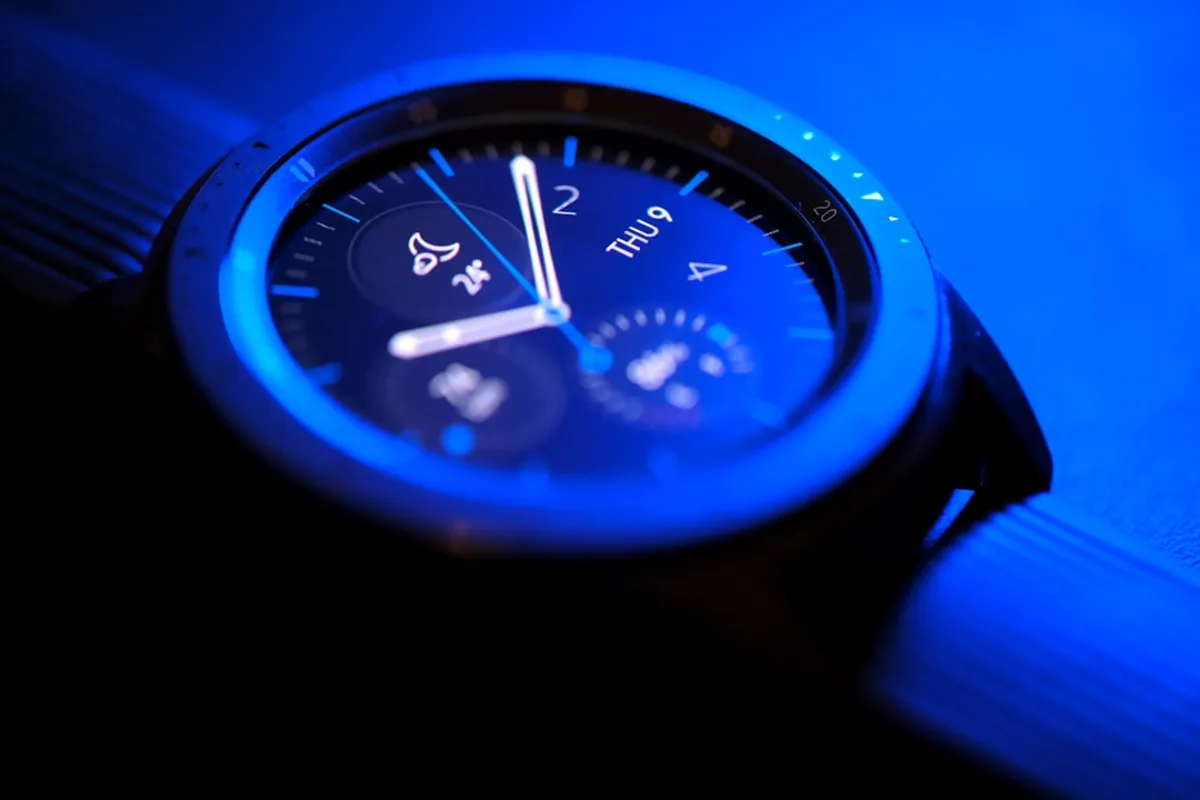
At a glance
- Case
- 40mm or 44mm
- Power
- Up to 50 hours (power saving), ~36 hours typical use
- Water resistance
- 5 ATM + IP68
- Often praised
- BioActive sensor is widely reported to be accurate for heart rate and SpO2
- Common criticism
- Battery life claims need context, realistically closer to 36 hours with normal use
📑 Table of Contents
This article on the Samsung Galaxy Watch 5 looks at the reputation it has built, based on Samsung's specifications and the wider run of reviews and owner reports, as one of the more health-focused smartwatches on Android. That's a strong claim to evaluate, especially against a field that includes Apple Watch, Google's Pixel Watch and the Garmin range.
This isn't a flawless device on paper. There are genuine trade-offs, particularly for anyone weighing it against the Apple ecosystem or expecting Garmin-level battery endurance. Where the Watch 5 is consistently praised is health tracking. Where it consistently draws criticism is battery life that doesn't quite live up to the marketing.
The BioActive Sensor: What It Actually Does
Samsung's BioActive sensor is the headline feature. It measures heart rate, blood oxygen (SpO2) and electrodermal activity for stress tracking, all from a single sensor cluster on the back of the watch.
Reviewers who have compared the Watch 5 against chest straps and dedicated fitness trackers generally report good heart rate accuracy, typically within a few beats per minute of chest-strap readings during steady-state activity. As with most wrist-based sensors, accuracy is reported to drop somewhat during high-intensity interval work, which is a known limitation of optical sensors generally rather than something specific to Samsung.
The SpO2 monitoring works passively overnight, which is more practical than the "press here and hold still" approach used by some competitors. Reported readings tend to sit in the normal healthy range for most wearers, and spot-checks against dedicated pulse oximeters are generally described as close enough for consumer-grade use.
The stress monitoring via electrodermal activity is the fuzziest part of the package. It estimates stress from skin conductance, and it's genuinely unclear how accurate this is in absolute terms. What's commonly reported is that the readings correlate reasonably well with how wearers subjectively feel, higher on demanding days, lower on relaxed ones, though whether that reflects genuine physiological stress or simply movement and temperature changes is an open question. Treat it as a rough indicator rather than a precise measurement.
Body Composition: Party Trick or Legitimate Tool?
The body composition feature is polarising. You stand barefoot, hold two fingers on the watch buttons, and it estimates body fat percentage, skeletal muscle mass, body water and BMI.
Comparisons against bioelectrical impedance scales and DEXA scans, as reported elsewhere, generally find the Watch 5's body fat estimate to be reasonably close, often within a percentage point or two. Skeletal muscle readings are typically described as less precise but still broadly in the right range.
This is not medical-grade precision, and nobody claims it is. As a tool for tracking trends over weeks and months under consistent conditions (fasted, same time of day), it appears to be genuinely useful. Users tracking a cut or a training block report being able to see muscle mass holding steady while fat percentage drops, which is the kind of directional insight that matters more than any single reading.
Results will vary with hydration, recent meals and other variables, so it's best treated as a trend tool rather than a single-point-in-time measurement.
Size and Wearability
The 44mm case is reported to wear smaller than the number suggests. At 45.4mm lug-to-lug, it should suit a range of wrist sizes without excessive overhang. The aluminium case weighs 33.5g without the strap, which is light enough that owners commonly describe it as comfortable for all-day wear despite the material.
Samsung states the Sapphire Crystal glass is 60% stronger than the Watch 4's screen, and owner reports of scratch resistance are generally positive, suggesting the case holds up well to everyday knocks. The oleophobic coating is described as decent rather than exceptional, so fingerprints are still a factor.
A 40mm version is available for smaller wrists or those who prefer a more compact fit, with case thickness at 9.8mm on both sizes, meaning neither model reads as particularly chunky on the wrist.
The stock silicone band is functional: comfortable, easy to clean, unlikely to irritate skin, but unremarkable to look at. The 20mm lug width is a standard size, meaning the aftermarket strap market is wide open for anyone who wants to swap in leather, fabric or metal options.
Battery Life: The Asterisk
This is where the marketing and the reality diverge most clearly. Samsung claims up to 50 hours in power saving mode, which is technically accurate but practically misleading for most everyday use.
In typical use, with always-on display enabled, GPS switched on for regular runs, and normal notification volume, real-world reports commonly put battery life at around 36 hours from full charge to needing a top-up. That's meaningfully short of the headline figure.
Disabling always-on display and continuous heart rate monitoring, which undermines the point of a health-tracking watch, is reported to stretch battery life to somewhere around 48 hours. Power saving mode, which switches off most of the smart features, is roughly where the advertised 50 hours becomes achievable.
Practically, this means charging every night or every other night for most owners. Fast charging softens the blow: the magnetic charger is specified to take the watch from 0 to 45% in about 30 minutes, with a full charge taking roughly 90 minutes. That's respectable, if not class-leading compared with some rivals.
For context, dedicated fitness watches such as Garmin's Instinct line are specified for multi-week battery life on a single charge. That's a different category of device solving a different problem, but it's worth remembering that "smartwatch" battery life is still nowhere near "watch" battery life.
Wear OS 3 and Samsung's Software
The Watch 5 runs Wear OS 3 with Samsung's One UI Watch overlay. For anyone already using a Galaxy phone with Samsung Health installed, setup is reported to be quick and largely seamless.
Outside the Samsung ecosystem, owners typically need to install Samsung Health, the Galaxy Wearable app, and in some regions Samsung Health Monitor, on an Android phone. It's manageable but adds a layer of bloat compared with Wear OS watches from other manufacturers.
The software itself is generally described as responsive, with no notable lag scrolling menus or opening apps. The lack of a rotating bezel (present on the older Galaxy Watch 4 Classic) is a common point of nostalgia among reviewers, though the touch bezel is widely considered a workable substitute once users adjust.
App selection via Google Play covers the major names (Spotify, Strava, Google Maps), though reviewers note that some third-party apps feel more like phone interfaces squeezed onto a small screen than properly designed watch apps. This is a broader Wear OS issue rather than something specific to Samsung.
Sleep tracking is consistently rated as one of the watch's stronger features, with reports of accurate sleep and wake detection and detailed stage breakdowns that align well with how wearers subjectively feel about their night's rest.
What Reviewers and Owners Flag as Frustrations
The absence of a rotating bezel is a recurring complaint, with many longtime Galaxy Watch users missing the physical feedback it offered over the digital equivalent.
The "raise to wake" gesture is reported by numerous owners to be overly sensitive, triggering during conversation or arm movement more often than it should. It can be disabled, at the cost of losing quick glanceability.
Third-party app quality is described as inconsistent, some run smoothly while others reportedly stutter or crash, an issue tied more to individual app development than to the watch itself.
The removal of MST (Magnetic Secure Transmission) for Samsung Pay is another notable step back from older Galaxy watches, which supported payment terminals that didn't accept NFC. The Watch 5 is NFC-only, which won't matter to most users but is a genuine downgrade for some.
Notification management is also commonly flagged as needing more middle ground, with users reporting either too many alerts or too few depending on configuration.
Who This Watch Is For
Based on its feature set, this appears to be one of the strongest Android smartwatches available for health tracking. Anyone who values metrics like body composition, continuous SpO2 and detailed sleep analysis, and who is on Android, has good reason to consider it.
It's a particularly strong fit within Samsung's own ecosystem, where Galaxy phone owners can access features such as ECG and, in some regions, blood pressure monitoring and Samsung Pay, that are limited or unavailable on other Android devices.
It's a weaker choice for anyone prioritising multi-week battery life (a Garmin is the better fit), offline music storage for long runs, or rotating bezel navigation, since Samsung has discontinued that design.
Versus the Competition
The Apple Watch Series 8 is generally considered to offer tighter integration for iPhone owners, faster charging and a more polished overall experience, but it lacks body composition analysis and is irrelevant to anyone on Android.
The Google Pixel Watch is often praised for its design and slightly tighter Wear OS optimisation, since Google controls both hardware and software, but it's reported to have shorter battery life and no body composition feature, at a higher price for less overall capability.
Garmin watches are widely regarded as superior for battery life and fitness tracking depth, but they aren't smartwatches in the same sense: no Google Pay, a limited app ecosystem and basic notification handling. They serve a different purpose.
Final Thoughts
The case for the Galaxy Watch 5 rests on the thing it's reported to do best: health tracking that outperforms most rivals at this size and price point. The body composition tool appears genuinely useful for tracking fitness progress over time, heart rate accuracy is well regarded, and sleep tracking is consistently reported as reliable.
Battery life is the clear compromise. Expect to charge it every night or every other night rather than the multi-day stretches the marketing implies. If that's a dealbreaker, other options exist. If it isn't, the evidence points to one of the more health-focused smartwatches currently on the market.
It isn't perfect, but the balance of research, specifications and owner reports makes a reasonably strong case for it.
⚙️ Specifications
✅ Pros
- +BioActive sensor is widely reported to be accurate for heart rate and SpO2
- +Body composition analysis useful for tracking fitness trends
- +Sapphire crystal resists scratches impressively well
- +Comfortable to wear all day, lightweight aluminium case
- +Sleep tracking is reliable and detailed
- +Fast charging makes short top-ups practical
❌ Cons
- −Battery life claims need context, realistically closer to 36 hours with normal use
- −No rotating bezel (a loss compared with older Galaxy watches)
- −Raise-to-wake gesture is reported to be too sensitive, triggering constantly
- −Third-party app quality inconsistent, some reportedly crash or stutter
- −Requires multiple Samsung apps if you're not already in the ecosystem
- −No MST for Samsung Pay, NFC-only now
Written by
RevieWatches Editorial Team
RevieWatches is an independent, informational watch site. We research specifications, track pricing across retail and grey markets, and summarise what published...
More in Smart Watches
Should You Upgrade to the Apple Watch Series 12?
The Series 12 arrived in September with faster charging, better glass, and a few exclusive features. Whether you should buy one depends entirely on which watch is sitting on your wrist right now.
Galaxy Watch 9 vs Pixel Watch 5: The Android Smartwatch Fight Gets Real
Samsung and Google just dropped their latest smartwatches within days of each other. Here's which one actually makes sense based on the specs.

Apple Watch Ultra 4: The Smart Watch That Finally Gets Serious
Apple's latest Ultra lands with 50-hour battery, on-device AI, and a clear message: smartwatches can do endurance now. But does it change the game for proper watch people?