Best Luxury Watches Under $10,000 (2026 Guide)
The $10,000 ceiling is where Swiss luxury gets serious without mortgage-level commitment. Here's what the research and owner consensus say actually deliver at this price point.
About this article: this is an informational article based on public sources: manufacturer specifications, published hands-on reviews by other outlets, owner feedback and current prices. We have not tested the watch ourselves, we are watch enthusiasts rather than professional journalists, and nothing here is buying advice. No brand paid for it. Our method
📑 Table of Contents
- Best Overall: Tudor Black Bay Pro
- Best Dive Watch: Omega Seamaster Planet Ocean
- Best Chronograph: TAG Heuer Carrera
- Best Pilot Watch: IWC Pilot's Watch Mark XVIII
- Best Dress Watch: Jaeger-LeCoultre Reverso Classic
- The Rolex Submariner Question
- How to Actually Choose
- What About Brands I Didn't Include?
- The Bottom Line
Luxury watches under $10,000 sit at the sweet spot. Below it, you're still in the realm of sensible purchases that don't require spousal negotiations or selling a kidney. Above it, you're into territory where every extra grand buys you diminishing returns and mostly just the privilege of saying you spent more.
This guide is built from close comparison of specifications, published reviews, and the recurring consensus among owners and reviewers across the watches that sit at or near this price ceiling. What follows isn't a spec-sheet recital. It's an attempt to work out what actually matters when you're choosing a watch to live with day to day.
Best Overall: Tudor Black Bay Pro
The Tudor Black Bay Pro is the watch that keeps coming up as the strongest all-rounder in this bracket. METAS-certified, in-house movement, 200m water resistance, and a $4,000 price tag that leaves you enough change for a decent holiday. It's a GMT that suits the office, the beach, a wedding, or a day of manual labour without the worry that comes with wearing something worth more than the job at hand.
The fixed bezel GMT complication is more useful than people give it credit for. For frequent travellers, being able to track home time without faffing about with a rotating bezel is a genuinely practical feature, and reviewers consistently flag it as one of the watch's best real-world traits. The yellow GMT hand is visible without being garish.
The bracelet gets particular praise. Tudor sorted their bracelet quality out a few years back, and this one is widely reported to wear like something twice the price. Solid links, good taper, a clasp that feels properly engineered rather than an afterthought.
It's not perfect. The date window cuts into the lower hour marker in a way that some find distracting on close inspection. And if you've got small wrists (under 6.5 inches), the 39mm case is reported to wear bigger than the number suggests because of the longish lugs. But as an everyday GMT under five grand, nothing else in this bracket really competes.
Best Dive Watch: Omega Seamaster Planet Ocean
The Omega Seamaster Planet Ocean is, by most technical measures, better engineered than most watches twice its price. Co-Axial Master Chronometer calibre 8900, 600m water resistance, ceramic bezel, METAS certification. On paper it's impressive, and reviewers consistently describe it as a tool watch that happens to look brilliant in a suit.
Owners repeatedly note how easily the watch disappears into daily life once it's on the wrist, in the way a really good pair of boots does. It isn't a watch that demands attention, which for a lot of people is exactly the point.
The helium escape valve is total overkill for anyone reading this. Saturation diving isn't a realistic use case for the vast majority of owners. But it's a reminder that Omega builds these things to a standard that goes beyond marketing, and the ceramic bezel is widely reported to hold up extremely well to the everyday knocks of city life.
The downside is size. At 43.5mm it wears large, and anyone with a slighter build might be better served by the 42mm Aqua Terra instead. The bracelet is excellent, but the rubber strap sold as an aftermarket option is widely considered overpriced for what it is.
Best Chronograph: TAG Heuer Carrera
The TAG Heuer Carrera has been around since 1963, which means it has proper motorsport heritage from before 'heritage' became a marketing department buzzword. The current version with the in-house TH20-00 movement (80-hour power reserve) is widely regarded as the best Carrera TAG has made.
It's slim, properly slim. At under 15mm, it sits under a shirt cuff without the bulge that most chronographs create, which makes it one of the more convincing dress chronographs at this price. That thinness is exactly what a dress chronograph needs to work.
The chronograph functions are described as clean and responsive, with good pusher travel and a satisfying click. The panda dial version (black subdials on cream) is the one most reviewers point to as the pick of the range. Legible, classic, unlikely to date. TAG has spent years trying to shake off its more downmarket 1990s reputation, and this watch is one of the clearest signs it has succeeded.
It's not as robust as the Tudor or Omega, and is better suited to dinner than to manual work. The movement is solid, but TAG's servicing network isn't as extensive as Omega's, which matters if you live outside major cities. Still, for a slim chronograph with genuine racing DNA under £6,000, it's the strongest option here.
Best Pilot Watch: IWC Pilot's Watch Mark XVIII
The IWC Mark XVIII is what a lot of pilot watches try to be and mostly fail at. The dial is about as clean as Swiss watchmaking gets: three hands, date, minimal text. It's antimagnetic to ISO 764 standards, which matters for anyone working around electronics, and it's descended from the 1948 RAF Mark XI, which is genuine military lineage rather than marketing fantasy.
The 40mm case is generally considered close to ideal, neither too big nor artificially small in the way some "vintage-inspired" pieces can look affected. It's reported to wear comfortably, sit well under a sleeve, and remain legible in genuinely low light, not just showroom low light.
The automatic movement isn't in-house (it's based on the Sellita SW300-1), and purists get sniffy about that. But it has a strong reputation for reliability and is serviceable virtually anywhere, which arguably matters more day to day than having an in-house calibre with a long service queue.
Where it falls down is the strap. The stock calf leather is fine but unremarkable, and putting it on a good NATO or a dark brown shell cordovan strap is widely reported to transform the watch's presence. The bracelet option exists but adds £1,500 and most reviewers don't rate it as worth the money.
Best Dress Watch: Jaeger-LeCoultre Reverso Classic
The Jaeger-LeCoultre Reverso's reversible case has been an Art Deco icon since 1931. Originally designed for polo players who kept smashing their watch crystals, it's now considered the thinking person's dress watch. At $8,950, it offers a genuine taste of haute horlogerie at a fraction of grand-complication prices.
This isn't a daily wearer for most people, more a special-occasion piece suited to settings where people notice watches. Its reversible case is consistently cited as the kind of detail that starts conversations even with people who otherwise don't care about watches.
The manual-wind movement represents proper old-school watchmaking. Winding it each morning is often described by owners as a ritual rather than a chore. The rectangular case is reported to wear more comfortably than its shape suggests, and the guilloché dial (where fitted) is the kind of detail that rewards close inspection.
It is, however, delicate. The case-flipping mechanism is robust in engineering terms but not something you'd want to knock about carelessly. And for anyone with larger wrists (over 7.5 inches), the proportions are generally considered off. This is better suited to slimmer wrists.
The Rolex Submariner Question
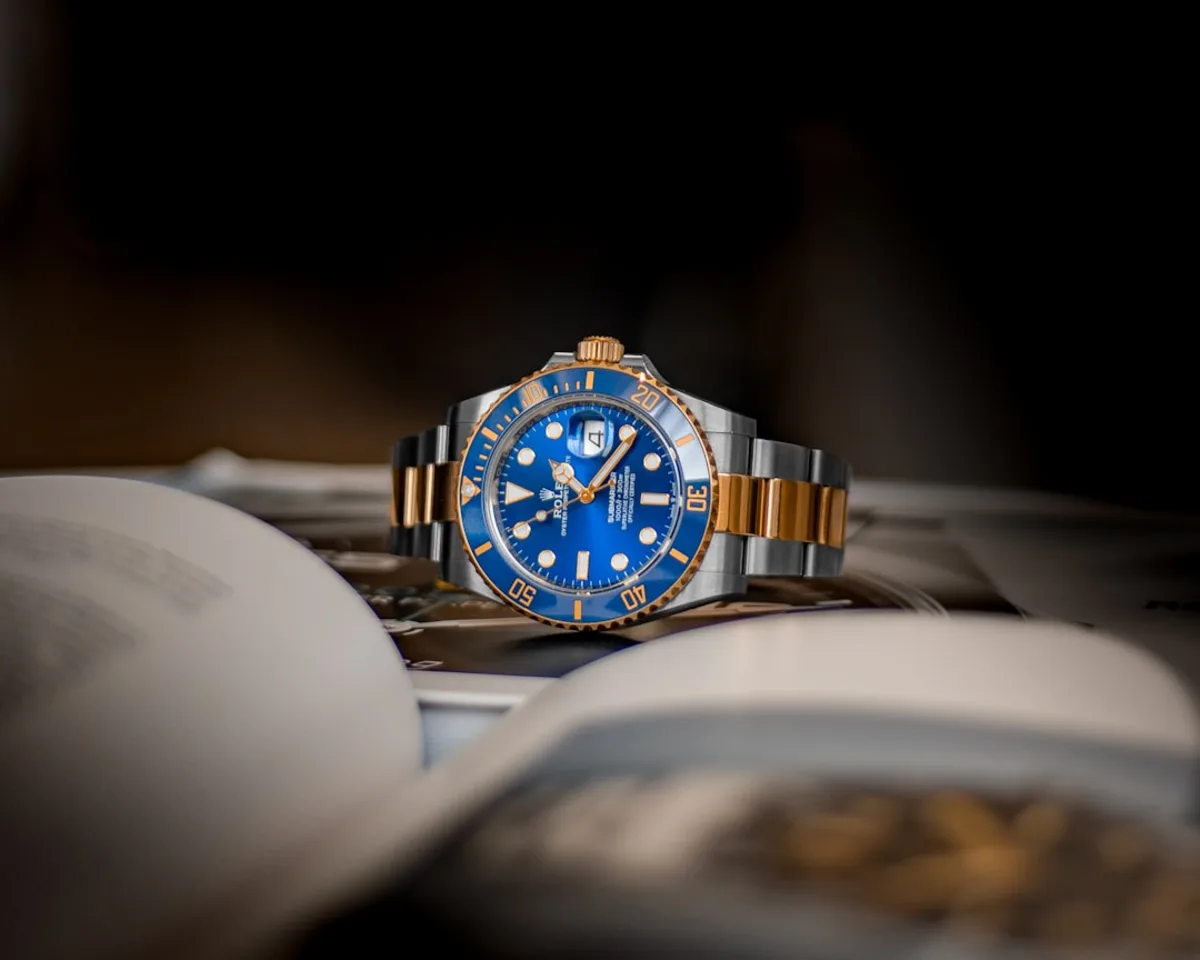
The Rolex Submariner retails at $10,100, which technically puts it outside this list by a hundred dollars. But the real issue isn't price, it's availability. Multi-year waiting lists at authorised dealers, grey market prices at 30-40% above retail, and the well-documented frustration of being told at a boutique that "building a relationship with the brand" might eventually earn you a call.
If you can find one at retail, it's widely regarded as worth taking. Many consider the Submariner the best all-around luxury sports watch ever made, and that reputation isn't undeserved. But given the practical difficulty of buying one, it's largely irrelevant for a guide about what you can actually purchase.
The Tudor Black Bay Pro or Omega Seamaster represent better available value. They're watches you can walk into a shop and buy today, which matters more than spec-sheet superiority you'll likely never get to own.
How to Actually Choose
Forget the flowcharts and decision matrices. Here's what matters:
Daily wear: Tudor Black Bay Pro or Omega Seamaster. Both are built to handle everything from swimming to black tie. The Tudor for understated, the Omega for presence.
Formal occasions: Jaeger-LeCoultre Reverso. Nothing else here works under a dinner jacket without looking like it's trying too hard.
Sports and outdoors: Omega Seamaster Planet Ocean. The 600m water resistance is overkill for most, but the build quality means it can be used hard without worry.
Heritage and tool watch appeal: IWC Pilot's Mark XVIII. For anyone drawn to the idea of a watch descended from actual military issue, this is it.
Motorsport and chronograph: TAG Heuer Carrera. Slim enough for daily wear, functional enough for genuine timing use if you ever need it.
What About Brands I Didn't Include?
Breitling makes excellent watches in this price range, but they tend to run chunky and, by most accounts, photograph better than they wear. Grand Seiko is spectacular value but doesn't carry the same brand recognition yet, which shouldn't matter but does for some buyers. Panerai was more interesting before its ownership under Richemont led to a more homogenised range. Longines makes solid pieces but they generally sit a tier below these in finishing.
Cartier's Tank is a strong dress watch option, but it's quartz at this price point, and the mechanical appeal of the Reverso is hard to match for that reason. Bell & Ross makes tool watches that deserve respect, but the design language is polarising. You either like the aviation-instrument aesthetic or you think it looks like a toy.
The Bottom Line
The Tudor Black Bay Pro takes the top spot. In-house movement, METAS certification, broad versatility, and a price that leaves room for actually living your life. It's the watch most often recommended to someone who wants one luxury piece they'll wear for decades.
But every watch on this list has a strong claim to decades of enjoyment. They're all built to standards that go beyond marketing. They're all serviceable long-term. And they're all watches that shouldn't leave you second-guessing the purchase.
The $10,000 ceiling is where Swiss luxury gets serious. Below it, you can access almost every Tudor, most Omegas, the cleanest IWC pilots, and even, in theory, the Rolex Submariner. Above it, you're mostly paying for brand prestige and incremental improvements that matter less than the watch industry wants you to believe.
Choose the Tudor if you're sensible. Choose the Omega if you want engineering depth. Choose the Reverso if you're romantic about watchmaking. But whatever you choose, these are watches built to be used, not hidden in safes.
Written by
RevieWatches Editorial Team
RevieWatches is an independent, informational watch site. We research specifications, track pricing across retail and grey markets, and summarise what published...
More in Luxury
How to Buy a Rolex at Retail: Waiting Lists Explained
Buying a Rolex at list price isn't impossible, it's just slow, political, and nothing like buying any other watch. Here's how the waiting list game actually works.

Farer Watches: British Design, Swiss Movements, Bold Colour
Farer is an independent British brand making colourful, Swiss-made watches sold direct. We looked at its movements, sizes, prices, guarantee and returns.
AIS Watches: Is This Pre-Owned Luxury Dealer Legit?
AIS Watches is an Atlanta dealer in pre-owned and new luxury watches with a strong review record. Its payment and return terms put more risk on the buyer than big platforms, so here is how to buy safely.